

The article emphasizes the creation of an effective sales team structure, underscoring the necessity of clearly defined roles, comprehensive training, and adaptability to market changes. It presents a step-by-step guide that includes:
Each of which is essential for optimizing performance and driving revenue growth.
In the competitive landscape of sales, the structure of a sales team can decisively influence the trajectory of success versus stagnation. Organizations are increasingly acknowledging that a well-defined team structure not only clarifies roles and responsibilities but also enhances communication and streamlines workflows, ultimately driving sales performance.
As businesses adapt to shifting market dynamics and evolving buyer behaviors, understanding the various sales team structures—from functional to hybrid models—becomes paramount.
This article delves into the critical components of effective sales team structures, explores the key roles within these teams, and underscores the importance of aligning team dynamics with overarching business objectives.
By examining best practices and innovative strategies for training and technology integration, organizations can empower their sales teams to operate at peak efficiency and achieve sustainable growth.
The sales team structure is crucial in defining roles, responsibilities, and workflows within a business. A clearly outlined framework not only enhances communication but also streamlines processes, ultimately driving revenue performance. Key components of an effective sales team structure include clarity in roles, alignment with overarching business objectives, and the ability to adapt to changing market conditions.
To unlock revenue potential, organizations can leverage discovery workshops to identify the kryptonite impacting their sales and presales teams. These workshops help uncover challenges in commercial strategies, value communication, and key differentiators, laying the groundwork for transformative solutions that address low conversion rates and elevate overall performance.
Research indicates that only 29% of representatives report complete satisfaction with their enablement materials, highlighting a critical area for improvement. This dissatisfaction often arises from poorly defined roles or insufficient training, which can impede overall performance. Indeed, 47% of Account Executives have left a sales position due to inadequate training or a subpar onboarding experience, underscoring the importance of a robust sales team structure.
Organizations must invest in comprehensive training initiatives to retain talent and enhance group effectiveness.
Furthermore, the B2B commerce landscape has evolved significantly, with buyers conducting extensive research before engaging with sales agents. This shift necessitates a sales team structure that accommodates multiple decision-makers and fosters collaboration among members. Successful organizations are increasingly developing comprehensive comparison guides and informative content to support their representatives, aligning with B2B buyers' preference for information-rich resources over traditional advertisements.
Indeed, 70% of sales representatives agree that a CRM system is highly significant, as it enhances communication and streamlines processes within sales group frameworks.
Current trends in 2025 indicate a growing emphasis on adaptable sales team structures that can swiftly respond to market fluctuations. Businesses prioritizing flexibility in their selling approaches are better positioned to achieve sustainable growth. For instance, companies adopting a transformation-as-a-service model can refine their revenue processes, ensuring that teams are equipped to meet the demands of a competitive marketplace.
Moreover, door-to-door marketing, which generates nearly $30 billion annually, exemplifies a selling approach that relies heavily on effective group frameworks to maximize conversion rates.
The MAGICSales Methodology further bolsters these efforts by providing a structured approach to sales empowerment, ensuring that teams are aligned with best practices and equipped with the necessary tools to thrive.
In conclusion, establishing a robust sales team structure is vital for optimizing performance and driving business success. By focusing on defined roles, efficient communication, and flexibility, organizations can empower their sales teams to operate at peak efficiency, resulting in enhanced outcomes and increased revenue. For enterprise executives seeking to transform their sales strategies, engaging with Magical Selling can offer the insights and support needed to navigate these challenges effectively.

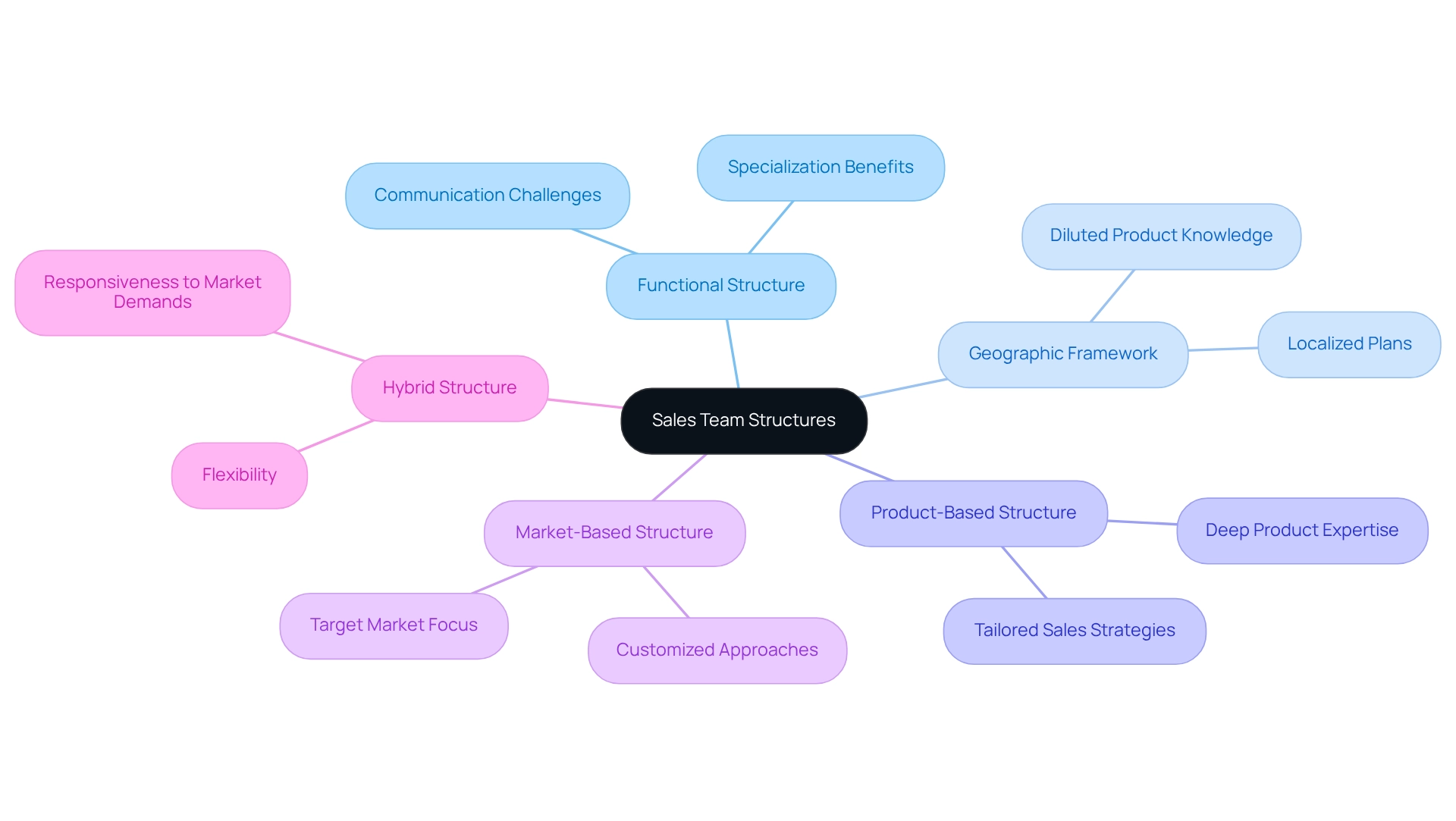
Sales groups can be arranged into several common structures, each with distinct characteristics that cater to different organizational needs.
Functional Structure: In this model, groups are organized by specific functions such as lead generation, closing, and customer service. This specialization enables group members to cultivate proficiency in their respective fields, thereby improving overall efficiency. However, while a functional sales team structure can enhance specialization, it may also create silos that hinder communication across teams.
Geographic Framework: This method segments teams according to geographic regions, allowing localized plans that can more effectively meet the distinct requirements of clients in various areas. This sales team structure is particularly effective in large markets where regional differences can significantly influence marketing strategies. While it promotes local responsiveness, it may dilute product knowledge.
Product-Based Structure: Teams are focused on specific products or services, which fosters deep expertise and allows for tailored sales strategies that highlight the unique features and benefits of each offering. This sales team structure is advantageous for organizations that have a diverse product line.
Market-Based Structure: In this model, groups are organized around specific customer segments or industries. This enables a more customized approach to commerce, as the sales team structure allows teams to develop plans that address the distinct challenges and requirements of their target markets. For instance, a case analysis on overhauling the marketing strategy for a regional infrastructure supplier demonstrates how a targeted market-oriented approach can assist entities in competing successfully against larger cloud providers.
Hybrid Structure: Combining elements from the above structures, a hybrid model offers flexibility and responsiveness to market demands. This adaptability can be vital in changing environments where client requirements and market circumstances often evolve.
Recent insights suggest that the worldwide door-to-door market is expected to expand at an annual rate of 6.4% until 2030, emphasizing the significance of efficient marketing approaches in seizing market opportunities. Furthermore, entities that adopt customized structures for deal development, advancement, and completion, like the 'Heart of the Deal Method' and the 'Problem Statement Method,' can greatly improve their effectiveness in selling. A well-organized sales group, backed by real-time performance insights and customized coaching via the 'Sales Gym membership' from Magical Selling, can achieve transformative outcomes, including a 50% cost reduction and a 30% productivity enhancement.
Ultimately, the decision regarding the sales team structure should align with the entity's objectives, size, and the dynamics of the market in which it operates, while also considering employee retention and motivation through incentives. By utilizing modern instruments and tactics, such as social media for prospecting, companies can ensure they achieve their revenue goals while maintaining employee engagement and motivation.
A successful marketing group is organized around several key positions, each contributing uniquely to the overall achievement of the organization.
Sales Development Representatives (SDRs): These professionals are crucial for lead generation, identifying and reaching out to potential customers. Their role is essential, as effective SDRs can significantly influence the revenue pipeline by ensuring a consistent stream of qualified leads. Training programs at Magical Selling emphasize the importance of consultative selling techniques, enabling SDRs to master problem identification and establish credibility with prospects.
Account Executives (AEs): AEs take the baton from SDRs, focusing on closing deals and nurturing relationships with clients. Their ability to transform prospects into clients is vital for revenue generation, making their function one of the most important in the selling process. Magical Selling's training modules equip AEs with strategies to effectively sell the problem first, followed by the solution, thereby enhancing their consultative selling skills.
Sales Supervisors: Assigned to manage the sales group, Sales Supervisors establish performance objectives and offer crucial guidance and assistance. Their leadership is essential in promoting a high-achieving sales environment and ensuring alignment with the company's objectives. By utilizing customized frameworks from Magical Selling, such as the Heart of the Deal Method, Sales Managers can improve their group's effectiveness and tackle common selling challenges.
Customer Success Managers: Post-sale, Customer Success Managers play a pivotal role in ensuring customer satisfaction and retention. By maintaining strong relationships with clients, they help secure repeat business and foster loyalty, which is essential for long-term success. The training programs emphasize the importance of these roles in driving account retention and revenue growth.
Sales Operations: This role focuses on data analysis, reporting, and process optimization. Sales Operations experts optimize workflows and provide insights that empower the sales group to function more effectively, ultimately boosting productivity. Magical Selling's resources assist these professionals in developing systems of sales strategies and high-value assets that facilitate deal creation and advancement.
Comprehending these roles and their duties is essential for establishing a cohesive sales team structure. Research indicates that organizations effectively utilizing Sales Development Representatives can see a marked improvement in lead generation. Furthermore, a case study emphasizes that representatives are dedicating a considerable amount of their time to non-revenue generating tasks, highlighting the necessity for solutions that simplify processes and enable greater concentration on selling activities.
Additionally, 55% of C-suite executives recognize enablement tools as their organizations' most crucial technological investment, underscoring the importance of incorporating contemporary strategies into conventional roles. Sales experts who participate in social selling are 51% more likely to achieve their targets, and 61% of organizations involved in social selling report revenue growth, showcasing the success of these methods. Furthermore, training on sales tools, such as the modules provided by Magical Selling, is essential for maximizing effectiveness and efficiency in sales operations, especially for enterprise executives.
In summary, each position within the sales team structure is interconnected. Recognizing their individual contributions can lead to enhanced collaboration and overall effectiveness in achieving revenue goals. Testimonials from previous participants emphasize the transformative effect of these training programs, reinforcing the importance of consultative selling and organized sales techniques.

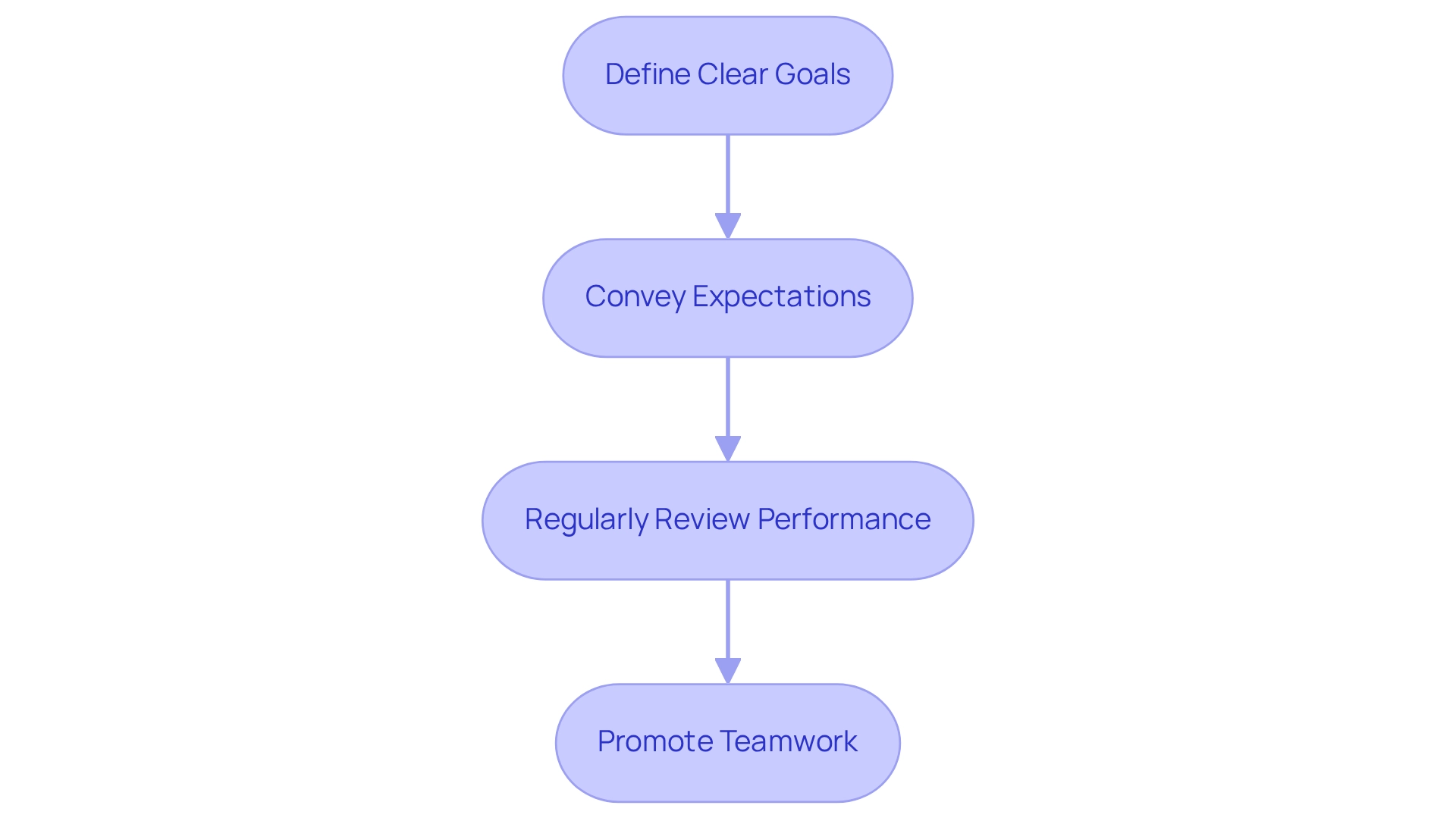
To effectively align the commercial group structure with business goals, organizations should take the following steps:
By aligning the sales team structure with business goals, organizations can enhance focus and achieve better outcomes. The influence of clear objectives on team performance cannot be overstated; when groups comprehend their targets and how to attain them, they are empowered to excel in their endeavors. As Jonathan Adashek from IBM suggests, while personalization is important, relevance must not be overlooked in aligning commercial strategies with business objectives.
Engage with Magical Selling to explore how our consulting services can assist you in identifying your revenue challenge, setting success criteria, and attaining directional progress within three months.
To establish a high-performing sales team structure, consider the following comprehensive steps:
Assess Your Needs: Begin by evaluating your business goals. Grasping your goals is essential in identifying the most appropriate framework that aligns with your strategic vision. This evaluation should encompass recognizing target markets, expected sales volume, and customer engagement approaches.
Define Roles: Clearly outline the specific functions and responsibilities needed within your sales group. This clarity aids in establishing accountability and guarantees that each member comprehends their role in the overall marketing strategy. Consider positions such as account executives, business development representatives, and customer success managers, customizing them to your business model. As Adam Gilberd, Executive Vice President of Sales at Salesforce, emphasizes, "Defining clear roles is essential for maximizing group effectiveness and driving results."
Recruit Talent: Focus on hiring individuals who not only possess the necessary skills and experience but also fit well within your company culture. The typical duration to attract sales professionals can differ, but optimizing your recruitment procedure can greatly minimize hold-ups and enhance team interactions.
Establish Processes: Create standardized procedures for lead generation, transactions, and customer management. Effective processes minimize inefficiencies; however, it's important to note that sales representatives often spend up to 70% of their time on non-selling tasks. Optimizing these procedures can improve productivity and enable your group to concentrate on finalizing agreements. Incorporating consultative selling techniques can further empower your group to sell the problem first and then the solution, establishing credibility with clients. Furthermore, utilizing the customized frameworks and strategies from Magical Selling's Seller Dimension can improve your selling process.
Implement Training: Provide comprehensive training to ensure all team members are well-versed in their roles and the overall selling process. Consistent training sessions can assist in tackling frequent issues, such as the absence of clarity from management, which is a main reason many representatives contemplate departing from their positions. Magical Selling's training programs emphasize mastering consultative techniques and improving effectiveness, which are essential for retention and morale. Explore our training packages and downloadable content to further enhance your group's skills.
Monitor and Adjust: Regularly evaluate the efficiency of your workforce arrangement. Utilize performance metrics and feedback to make necessary adjustments in response to market changes and group performance. Participating in regular individual meetings—currently utilized by only 32% of teams—can promote open dialogue and ongoing enhancement.
By diligently adhering to these steps and utilizing the customized frameworks and approaches from Magical Selling, organizations can establish a strong sales team structure that not only fosters success but also adjusts to the changing needs of the market.

Training and development are crucial elements for the success of selling groups. Organizations should adopt the following strategies to maximize their effectiveness:
Conduct Regular Training Sessions: Continuous training is essential for keeping team members updated on product knowledge, selling techniques, and evolving market trends. Magical Selling's intensive 2-day workshops, such as the Rainmaker Revenue program, are designed to transform performance management, enabling sellers to achieve full productivity swiftly. Research indicates that organizations with effective training for representatives are 4.9 times more likely to assert that their onboarding procedures allow sellers to reach this objective. Furthermore, 39% of small businesses offer classroom-led training, while 17% utilize virtual classrooms for employee training, underscoring the diverse methods available for effective training.
Utilize Coaching: Implementing coaching programs facilitates personalized feedback and support, significantly enhancing the abilities of representatives in the field. Magical Selling's customized selling solutions ensure that every member receives the guidance necessary to excel in their roles, addressing specific challenges and elevating performance.
Encourage Continuous Learning: Fostering a culture of continuous learning is vital. Providing access to resources such as online courses, workshops, and industry conferences empowers professionals to stay ahead of the curve and adapt to new challenges. Magical Selling's discovery workshops help identify the kryptonite in sales groups, enabling focused development. Incorporating intensive practice sessions into training prepares representatives for real-world challenges, ensuring they can apply their knowledge effectively.
Measure Training Effectiveness: Regular evaluation of training programs is essential to assess their impact on performance. Organizations investing in customized training can anticipate an average ROI of 353%, highlighting the financial benefits of effective training initiatives. Moreover, 92% of employees believe that workplace training positively affects their job engagement, emphasizing the importance of investing in employee development.
By prioritizing training and development within their sales team structure, companies can significantly enhance the skills and confidence of their sales staff, leading to improved performance and a stronger competitive advantage in the market. A commitment to ongoing training not only attracts top talent but also fosters a motivated workforce, ultimately driving sustainable growth. With over 20 years of experience and 500+ successful projects, Magical Selling has a proven track record of delivering effective training solutions that drive results.

To enhance sales group performance through technology, organizations should consider the following strategies:
Implement a CRM System: A Customer Relationship Management (CRM) system is crucial for managing customer interactions and sales information efficiently. Studies indicate that companies can expect an average return of $8.71 for each dollar invested in CRM tools, underscoring their significant impact on revenue performance. By centralizing customer information, sales personnel can streamline their processes and enhance customer interactions. Recommended CRM software, such as Salesmate, can help overcome adoption challenges and drive success in CRM implementation.
Employ Sales Support Tools: Equipping sales personnel with sales support tools is essential for providing the resources, training, and analytics that bolster their efforts. Magical Selling offers customized frameworks and strategies for deal creation, progression, and closing, which enhance productivity and empower professionals with the insights necessary to tailor their approaches to specific customer needs, ultimately driving higher conversion rates.
Adopt Communication Platforms: Effective communication is vital for collaboration and information exchange among team members. Utilizing contemporary communication channels fosters a culture of openness and collaboration, enabling the sales team to respond swiftly to customer inquiries and market shifts, which is critical in today’s fast-paced environment.
Utilize Data Analytics: Analyzing revenue data allows organizations to identify trends, evaluate performance, and make informed decisions. By leveraging data analytics, the sales team can pinpoint areas for improvement and adjust their strategies accordingly, ensuring they remain competitive and responsive to market demands. Magical Selling's methodology involves developing a framework of sales strategies and high-value artifacts that can greatly enhance data-driven decision-making.
Case Study Insight: For instance, Calhoun's Lead Generation Strategy employed tailored digital marketing solutions from WebFX to generate more leads through search engine marketing (SEM). This approach significantly increased lead generation, illustrating the effectiveness of tailored marketing techniques in improving sales outcomes. With over 20 years of experience and more than 500 successful projects, Magical Selling has demonstrated methods that can transform sales results.
CRM Adoption Rates: According to a study conducted by Kimble, CRM adoption in Europe is 2% higher than in the US, standing at 85.7%. This statistic highlights the growing importance of CRM systems in enhancing sales processes across various markets.
Integrating these technological strategies not only enhances the effectiveness of sales personnel but also leads to improved outcomes, positioning companies for sustained growth and success in an increasingly competitive landscape.

To sustain an efficient salesforce structure, organizations must adopt best practices that drive success:
Regularly Review and Adjust: Continuously evaluate the revenue framework by analyzing performance metrics and adapting to market changes. This proactive strategy ensures alignment with evolving business objectives and customer needs. Utilizing Discovery Workshops can identify the 'kriptonites' affecting sales and presales members, allowing for targeted adjustments that enhance overall performance.
Foster Open Communication: Establishing open lines of communication within the group is crucial for addressing challenges and celebrating successes. Research indicates that groups with strong communication practices experience a significant boost in performance, fostering collaboration and trust among members. However, despite the advantages, coaching often lacks customization, consistency, and organizational backing, which can impede effective communication and growth. Magical Selling's tailored coaching solutions can address these gaps, ensuring that communication is both effective and supportive.
Acknowledge and Reward Performance: Recognition programs greatly inspire and reward high-achieving individuals. Organizations that consistently acknowledge accomplishments see a substantial boost in morale and productivity, leading to enhanced revenue outcomes. Moreover, tackling the most time-intensive duties for representatives, such as meeting customer budget requirements and customizing communication, can further improve group performance. By utilizing innovative solutions from Magical Selling, groups can streamline these processes and concentrate on what truly drives results.
Stay Agile: The ability to modify the structure in response to new opportunities or challenges is essential. Statistics indicate that groups that frequently adjust their strategies are better positioned to capitalize on market trends, thereby improving overall effectiveness. A formal coaching process raises quota achievement to 91%, compared to 85% for less organized methods, highlighting the significance of structured coaching in sustaining an effective sales team structure. Magical Selling's strategy emphasizes rapid action and quantifiable outcomes, ensuring groups can adjust promptly and efficiently.
By implementing these best practices, companies can ensure their sales groups remain efficient, inspired, and aligned with broader business objectives. The impact of structured coaching programs further underscores this approach, with studies revealing an 8% increase in annual revenue and a 28% higher win rate for teams that engage in real-time, deal-specific coaching. Furthermore, organizations can anticipate concrete outcomes within three months of applying these strategies.
This underscores the importance of not only maintaining a robust framework but also investing in the ongoing advancement of personnel through customized strategies that address industry challenges. Additionally, it is essential to segment accounts based on the appropriate sales approach needed to win, rather than solely on vertical or client size, to double sales productivity.

Establishing an effective sales team structure is crucial for driving performance and achieving business success. Clarity in roles, effective communication, and adaptability to market changes are foundational elements of a successful sales strategy. By leveraging discovery workshops, organizations can uncover challenges and implement targeted solutions that enhance the sales process.
The exploration of various sales team structures—functional, geographic, product-based, market-based, and hybrid—demonstrates that there is no one-size-fits-all approach. Each structure possesses unique advantages and should align with the organization's goals and market dynamics. Furthermore, the emphasis on key roles within sales teams, including Sales Development Representatives, Account Executives, and Sales Managers, underscores the importance of specialized skills and collaboration in driving results.
Training and development emerge as vital components for maintaining a high-performing sales team. Ongoing training, personalized coaching, and a commitment to continuous learning can significantly boost team effectiveness and morale. Additionally, the integration of technology, such as CRM systems and sales enablement tools, facilitates streamlined processes and enhances communication, ultimately optimizing performance.
In conclusion, the path to sales success is paved with a well-defined team structure, aligned with business objectives and responsive to market demands. By prioritizing clarity, collaboration, and continuous improvement, organizations can empower their sales teams to achieve peak performance and sustainable growth. Embracing these strategies not only enhances individual and team effectiveness but also positions businesses to thrive in an increasingly competitive landscape.
Why is the sales team structure important for a business?
The sales team structure is crucial as it defines roles, responsibilities, and workflows, enhancing communication and streamlining processes to drive revenue performance.
What are the key components of an effective sales team structure?
Key components include clarity in roles, alignment with business objectives, and the ability to adapt to changing market conditions.
How can organizations identify challenges impacting their sales teams?
Organizations can leverage discovery workshops to uncover challenges in commercial strategies, value communication, and key differentiators that affect sales performance.
What is the significance of training for sales representatives?
Comprehensive training initiatives are essential for retaining talent and enhancing group effectiveness, as many representatives report dissatisfaction with their enablement materials.
What does recent research indicate about sales representatives' satisfaction with training?
Research shows that only 29% of representatives are completely satisfied with their enablement materials, and 47% have left a position due to inadequate training or onboarding experiences.
How has the B2B commerce landscape changed regarding sales?
The B2B landscape has evolved with buyers conducting extensive research before engaging with sales agents, necessitating a sales team structure that accommodates multiple decision-makers.
What tools do sales representatives find significant for enhancing communication?
A CRM system is considered highly significant by 70% of sales representatives, as it enhances communication and streamlines processes.
What trends are shaping sales team structures in 2025?
There is a growing emphasis on adaptable sales team structures that can quickly respond to market fluctuations, with businesses prioritizing flexibility for sustainable growth.
What is the MAGICSales Methodology?
The MAGICSales Methodology provides a structured approach to sales empowerment, ensuring teams are aligned with best practices and equipped with the necessary tools to thrive.
What are the common structures for organizing sales teams?
Common structures include Functional, Geographic, Product-Based, Market-Based, and Hybrid structures, each catering to different organizational needs.
What advantages does a Hybrid Structure offer?
A Hybrid Structure combines elements from various models, providing flexibility and responsiveness to changing market demands.
How can companies ensure they meet revenue goals while keeping employees engaged?
By utilizing modern instruments and tactics, such as social media for prospecting, companies can achieve revenue goals while maintaining employee motivation and engagement.


