

Mastering prospecting by email is essential for success in today's competitive landscape. Understanding the significance of personalized communication is crucial, as it sets the foundation for effective engagement with potential clients. Crafting compelling subject lines and employing strategic follow-up methods can dramatically enhance your outreach efforts.
Research shows that tailored messaging does not merely increase engagement; it significantly boosts conversion rates. Statistics reveal that personalized emails outperform generic outreach, underscoring the value of customization in your communication strategy. By prioritizing these elements, you position yourself for greater success in connecting with your audience.
In the competitive landscape of sales, prospecting emails have emerged as a vital tool for establishing connections and driving conversions. These strategically crafted messages not only introduce potential customers to products and services but also serve as the first step in building meaningful relationships. As the sales cycle becomes increasingly complex, with B2B processes extending over longer periods, the importance of effective communication through prospecting emails cannot be overstated.
From scalability and cost-effectiveness to measurable results and personalization, the benefits of these emails are manifold. As businesses adapt to a rapidly evolving market, mastering the art of prospecting emails is essential for any sales professional aiming to achieve success in 2025 and beyond.
Prospecting by email involves strategically crafted communications aimed at potential customers, designed to spark interest and initiate conversations about a product or service. These messages are crucial in the selling process, allowing sales experts to engage with prospects who may not yet be aware of their products. The significance of prospecting messages cannot be overstated; they serve as gateways to new opportunities, nurture relationships, and ultimately drive revenue growth.
In 2024, the typical B2B selling process required 25% more time than it did five years earlier, underscoring the necessity for efficient communication strategies such as prospecting messages to sustain momentum in sales cycles. Statista indicates that 15.3% of promotional outreach campaigns are dispatched, highlighting the importance of direct marketing in connecting with potential clients. Organizations that establish robust lead nurturing frameworks, which frequently incorporate well-designed prospecting messages, experience a notable 20% increase in business opportunities compared to those that do not nurture leads efficiently, as evidenced by the case study titled 'Lead Nurturing Effectiveness.'
Moreover, the global door-to-door market is projected to expand at an annual rate of 6.4% until 2030, signaling a shift towards more tailored and direct marketing methods, including outreach via electronic communication. In this context, prospecting by email not only boosts engagement rates but also significantly enhances conversion rates, positioning it as a crucial element of any successful business strategy.
At Magical Selling, we recognize the challenges faced by commercial teams, particularly in quota management and market competition. Our customized frameworks and strategies for deal creation, progression, and closing, including the 'Heart of the Deal Method' and 'Deal Discovery Frameworks,' empower professionals to navigate these challenges effectively. Expert perspectives underscore the efficacy of outreach messages, with numerous business leaders advocating their use as a primary resource for communication.
By employing focused communication and customization, sales experts can cultivate significant engagements that lead to enhanced revenue growth. As we advance further into 2025, the importance of prospecting by email in revenue strategies will only continue to grow, solidifying its role as an essential component in achieving commercial success. Anticipate swift, decisive action that turns the tables in your favor with Magical Selling's solutions.

Prospecting emails offer a plethora of advantages that can significantly enhance sales efforts, particularly when paired with tailored account segmentation strategies:
Scalability: Unlike traditional face-to-face meetings, prospecting emails can be dispatched to numerous recipients simultaneously. This capability empowers marketing teams to broaden their outreach effectively, connecting with a larger audience without the constraints of time and place.
Cost-Effectiveness: Email marketing stands out as a budget-friendly alternative to conventional marketing strategies. It allows businesses, regardless of size, to engage in targeted outreach without incurring substantial costs, making it an ideal choice for both startups and established enterprises. A case study titled 'Benefits of Digital Marketing for Small Businesses' illustrates how digital marketing provides cost-effective, targeted messaging that fosters brand loyalty and drives revenue with minimal investment.
Measurable Results: A key benefit of prospecting via email is the ability to track performance metrics such as open rates, click-through rates, and response rates. This data provides marketing experts with practical insights, enabling them to refine their strategies and enhance future campaigns based on real-time feedback.
Personalization: Emails can be customized to resonate with the specific needs and interests of each prospect. This level of personalization not only boosts engagement but also increases the likelihood of conversion, as prospects feel valued and understood. By categorizing accounts according to the appropriate marketing strategy, teams can tailor their communication to align with the distinct characteristics of each potential client.
Building relationships through prospecting via email fosters trust and nurtures leads over time. By maintaining consistent communication, professionals can cultivate connections that are crucial for finalizing agreements and ensuring long-term customer loyalty. This approach aligns with consultative selling techniques that establish credibility and transform sales interactions.
In 2025, the effectiveness of prospecting messages continues to be underscored by statistics indicating that such communications outperform social media posts by 13% and social media ads by 11%. Furthermore, 73% of marketers have reported an increase in correspondence engagement rates, a trend attributed to improved compliance with regulations such as GDPR. As Ross Adamson, a Marketing Executive, points out, "With over 4 billion active users globally, electronic mail remains one of the most prevalent and extensively used communication platforms across all demographics and regions."
These insights emphasize the enduring significance of electronic communication as a powerful resource in the sales arsenal, especially as businesses seek scalable and cost-effective methods to connect with potential clients. Moreover, enhancing message deliverability entails maintaining a clean contact list and verifying domains, which are essential for maximizing the impact of outreach.

An effective prospecting email must encompass several key elements to maximize engagement and response rates.
Clear Subject Line: A brief and engaging subject line is vital, attracting attention and motivating the recipient to open the message. Research indicates that messages with clear subject lines can significantly enhance open rates, establishing this as the first step in effective communication.
Personalized Greeting: Addressing the recipient by name fosters a connection and demonstrates that the message is tailored specifically for them. Personalization improves the recipient's perception of the message's relevance, increasing the chances of a favorable response.
Value Proposition: Clearly articulating the benefits of your product or service is essential. This section should address how your offering meets the recipient's specific needs, making it clear why they should consider your solution. Highlighting unique selling points differentiates your message from others in their inbox. Establishing credibility is key; as emphasized in consultative selling, selling the problem first and then the solution can significantly enhance your approach.
Call to Action (CTA): Incorporating a specific request, such as arranging a call or responding to the message, directs the recipient's subsequent actions. A well-defined CTA can significantly increase engagement, providing a clear direction for the recipient to follow. Swift, decisive action is essential in turning the tables in your favor, as highlighted by Magical Selling's approach to achieving tangible results. To explore our consultative selling module priced at $169.00, please reach out to us today.
Professional Signature: A well-designed signature that contains your contact details enhances the trustworthiness of your correspondence. It not only facilitates easy responses but also reinforces your professionalism and the legitimacy of your outreach.
Effective prospecting by email can lead to higher engagement rates. Statistics demonstrate that prospecting by email surpasses social media posts by 13% and social media advertisements by 11%, emphasizing its effectiveness as a communication tool. Furthermore, electronic marketing boasts an impressive return on investment, with 30% of marketers recognizing it as the most effective digital marketing channel.
For each dollar invested, digital marketing produces an average return of $36. Additionally, 52% of consumers indicated making a purchase directly from an email in the past year, highlighting the effectiveness of prospecting by email in generating revenue. As Andrew Fragias, Product Manager, observes, "Agentforce has made a significant impact on the Salesforce and AI landscape, striving to transform a user’s daily activities through agentic workflows," underscoring the significance of innovative tools in commerce.
Lastly, requesting referrals after positive interactions should be a necessary element of the sales approach, as it improves engagement and may result in additional opportunities.

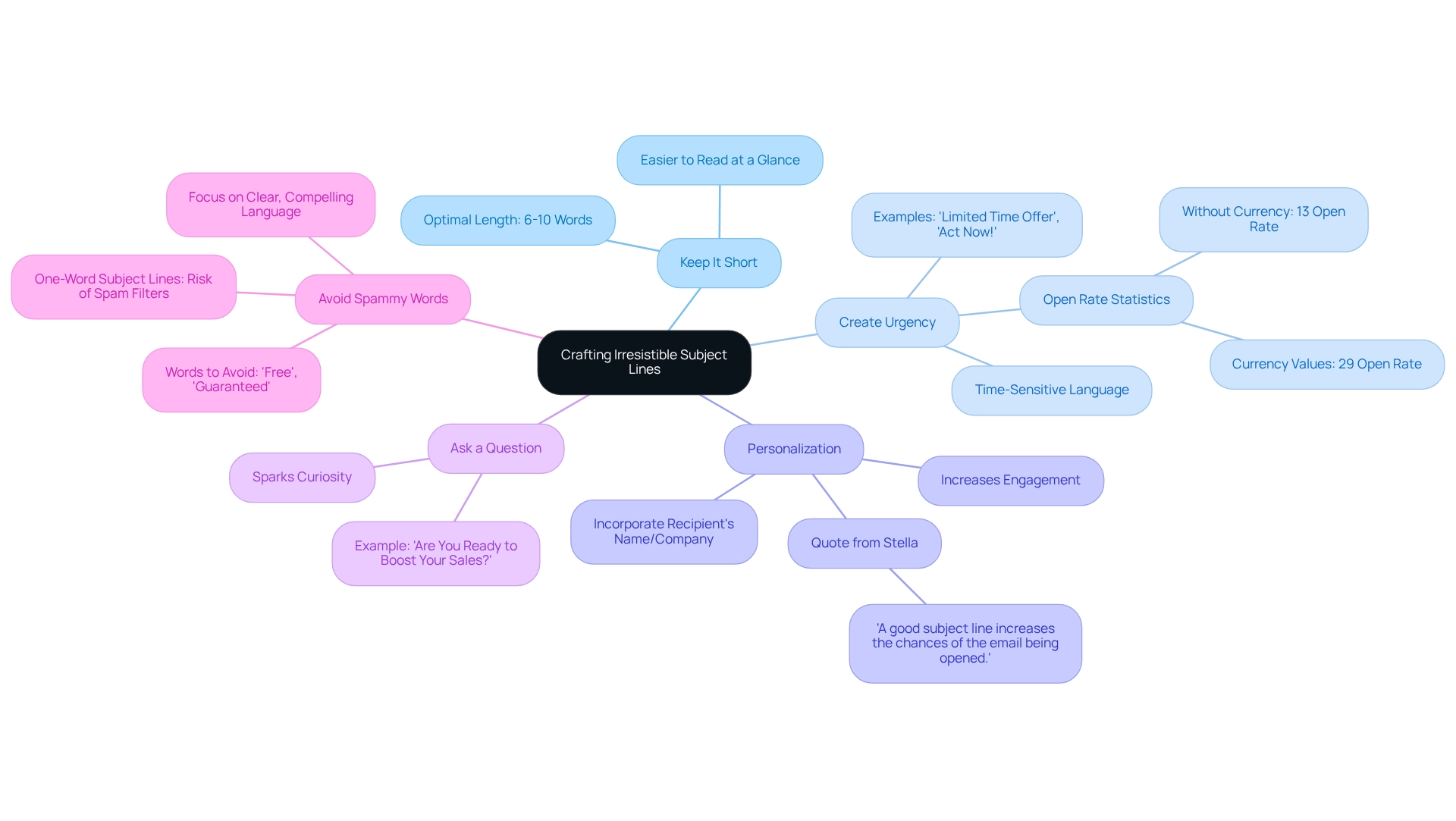
Crafting an irresistible subject line is crucial for capturing attention and increasing open rates. To achieve this, consider the following effective strategies:
Keep It Short: Aim for 6-10 words to ensure your subject line displays fully in most inboxes. Research indicates that concise subject lines are more likely to be opened, as they are easier to read at a glance.
Create Urgency: Employ time-sensitive language to encourage immediate action. Phrases like 'Limited Time Offer' or 'Act Now!' instill a sense of urgency, prompting recipients to prioritize your message over others. A study revealed that messages featuring currency values in their subject lines achieved an impressive average open rate of 29%, compared to just 13% for those lacking this element, highlighting the effectiveness of urgency in subject lines.
Personalization: Tailor your subject lines by incorporating the recipient's name or company. Personalization not only makes the message feel more pertinent but also enhances the chances of engagement. As Stella, a content writer, observed, 'A good subject line enhances the likelihood of the message being opened by the recipient.'
Ask a Question: Posing a question can spark curiosity and encourage the recipient to open the message. For example, 'Are You Ready to Boost Your Sales?' invites the reader to consider their current situation and the potential benefits of your message.
Avoid Spammy Words: Be mindful of language that may trigger spam filters. Terms such as 'Free' or 'Guaranteed' can result in your message being filtered out. While one-word subject lines can spark interest, they may also activate spam filters, creating a challenge for prospecting by email in cold outreach campaigns. Instead, focus on clear, compelling language that conveys value without sounding promotional.
Integrating these approaches can greatly improve the impact of your messaging campaigns, particularly in the context of prospecting by email. Furthermore, a 30-minute complimentary correspondence consultation with a specialist can offer customized insights to enhance your marketing approaches.
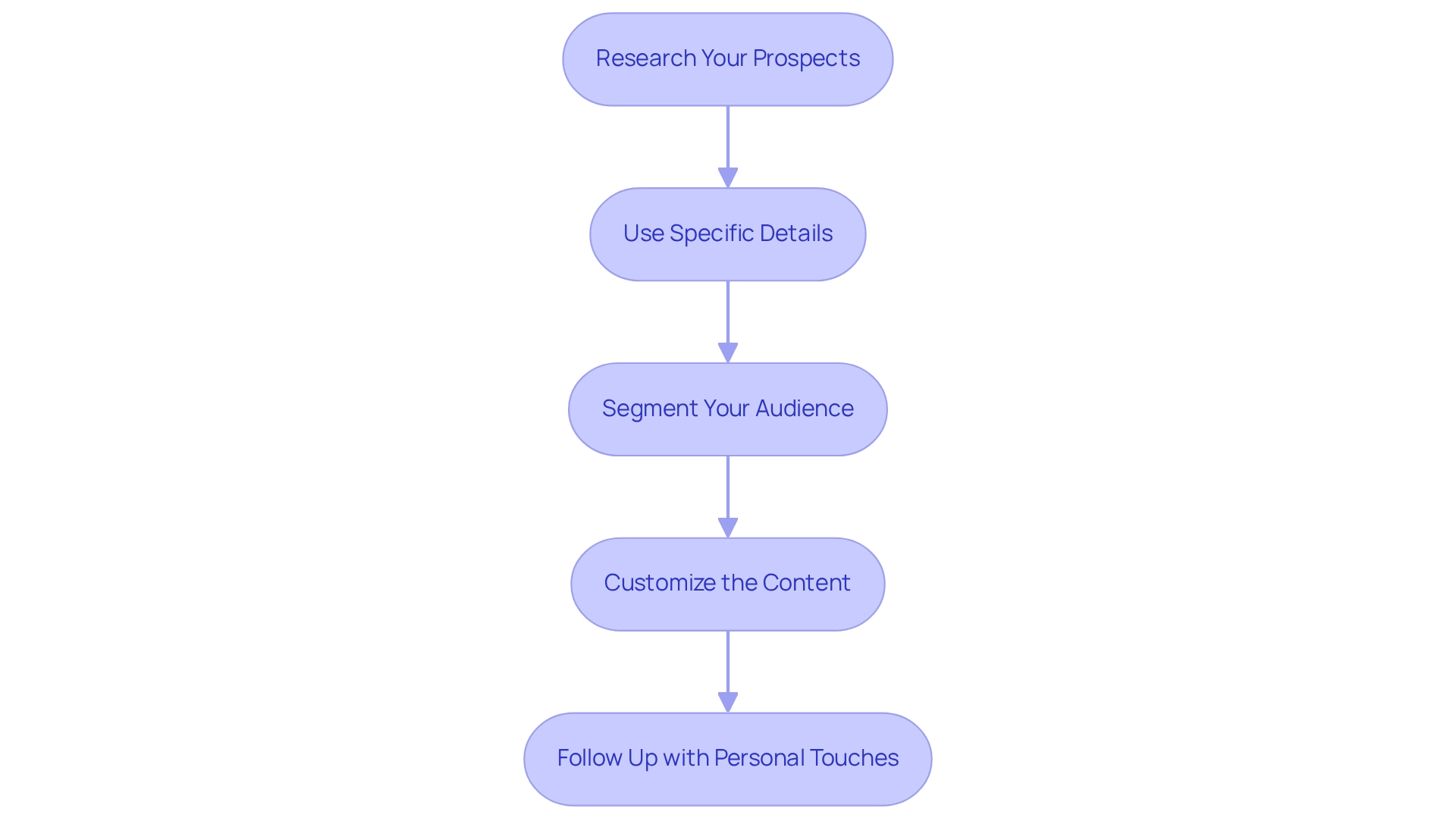
Customization in prospecting by email is a powerful strategy that can substantially enhance engagement rates, making it an essential tactic for professionals at Magical Selling. Consider the following effective approaches:
Research Your Prospects: Conduct thorough research to gain insights into the industry, challenges, and interests of your prospects. This foundational knowledge enables you to tailor your message in a way that resonates with their specific needs.
Use Specific Details: Incorporate recent achievements or noteworthy news related to the prospect's company. This demonstrates genuine interest and signals that you are not sending a standard message, but rather a communication crafted specifically for them.
Segment Your Audience: Group your prospects based on shared characteristics or behaviors. By categorizing your audience according to the most suitable marketing strategies, rather than merely by industry or client size, you can deliver more relevant messages that address the distinct needs of each segment. This tailored approach can double your sales productivity by ensuring that your efforts are focused on the most promising leads.
Customize the Content: Adjust the body of your message to reflect the prospect's specific needs and illustrate how your solution can address them. Personalization in content not only captures attention but also demonstrates the value you can provide.
Follow Up with Personal Touches: Reference prior conversations or interactions in your follow-up messages. This reinforces the relationship and shows that you value the prospect's time and input.
The impact of personalization is underscored by recent statistics indicating that 80% of consumers prefer brands that customize content to enhance their journey. However, it is noteworthy that 23% more consumers are uncomfortable with brands using personal information for personalization in 2024 compared to 2023. Furthermore, in 2025, personalization is increasingly viewed as a basic expectation, with over 70% of consumers considering it essential. This trend emphasizes the importance for sales experts at Magical Selling to adopt tailored approaches in their prospecting efforts.
Effective personalized email campaigns have demonstrated significant improvements in engagement rates. For instance, brands utilizing platforms such as TikTok have successfully harnessed customized advertising techniques to boost revenue, showcasing the impact of personalized messaging in achieving quantifiable outcomes. Additionally, 28% of digital marketers currently implement personalization in mobile applications, reflecting a broader trend in marketing strategies.
By implementing these strategies, sales professionals at Magical Selling can enhance their email prospecting efforts and cultivate stronger connections with potential clients.
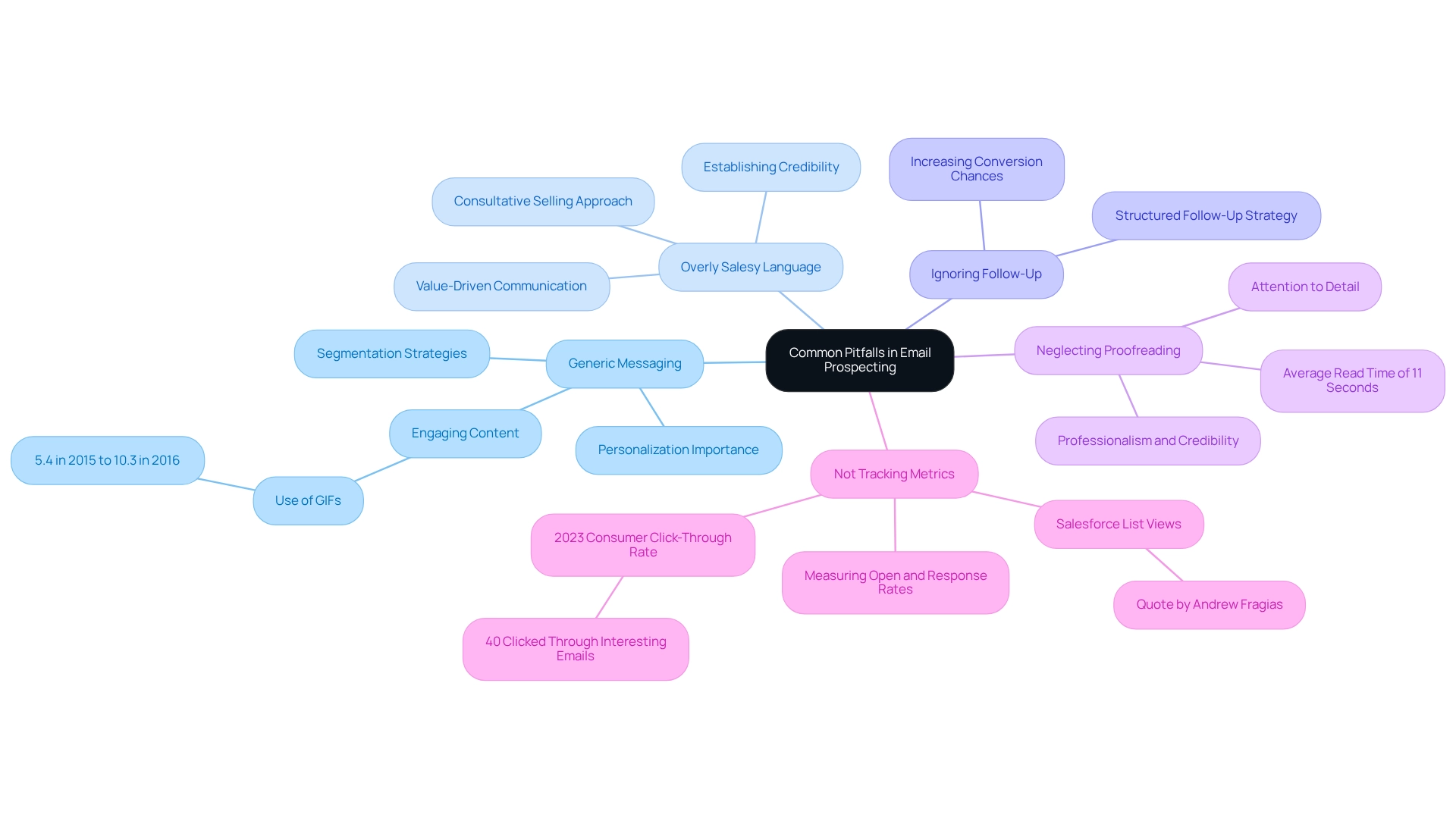
To maximize the effectiveness of your prospecting emails, it is crucial to avoid these common pitfalls:
Generic Messaging: Sending the same email to numerous recipients can significantly reduce engagement levels. Personalization is key in prospecting by email; tailored messages resonate more with recipients, leading to higher open and response rates. Dividing your accounts according to the suitable sales method instead of solely by vertical or client size can double your revenue efficiency. In fact, the percentage of emails containing personalized content has been shown to increase engagement, with a notable rise in the use of GIFs in emails from 5.4% in 2015 to 10.3% in 2016. This illustrates how engaging content can enhance the effectiveness of your outreach.
Overly Salesy Language: Prospects are often turned off by aggressive sales pitches. Instead, focus on providing value and insights that address their specific needs. This consultative selling approach fosters trust and encourages a more positive response. Remember to sell the problem first, establishing credibility with respect to your product and decision-making capabilities. When you provide proof, ensure it is substantial and not just 'word salad' or 'sales talk,' as many sellers inadvertently try to do.
Ignoring Follow-Up: A lack of follow-up can result in missed opportunities. Establishing a structured follow-up strategy is essential for prospecting by email to keep the conversation going and to remind prospects of your offerings. Consistent follow-ups, especially through prospecting by email, can significantly increase the chances of conversion.
Neglecting Proofreading: Spelling and grammatical errors can undermine your professionalism and credibility. Always take the time to proofread your messages before sending them out. A polished message reflects attention to detail and respect for the recipient. Remember, with an average message read time of just 11 seconds, your communication must be clear and engaging from the start.
Not Tracking Metrics: Without measuring key metrics such as open and response rates, it becomes challenging to evaluate the effectiveness of your messaging campaigns. Monitoring these metrics enables you to recognize which approaches are effective and where modifications are required. For example, in 2023, 40% of consumers clicked through intriguing messages, emphasizing the significance of captivating content. Additionally, as Andrew Fragias, Product Manager, notes, "Salesforce list views are essential for users who need to filter, view, and update records efficiently," underscoring the importance of managing your outreach effectively.
By steering clear of these traps and utilizing customized account segmentation strategies, sales experts at Magical Selling can boost their outreach efforts, resulting in better engagement and increased conversion rates. Moreover, reflect on the findings from the case study entitled 'Achieving Marketing Goals,' which demonstrates how messaging campaigns permit pre-scheduled communications, allowing companies to modify content prior to delivery. This flexibility is not present in conventional media such as print or television, emphasizing the necessity for meticulous planning and execution in digital marketing.
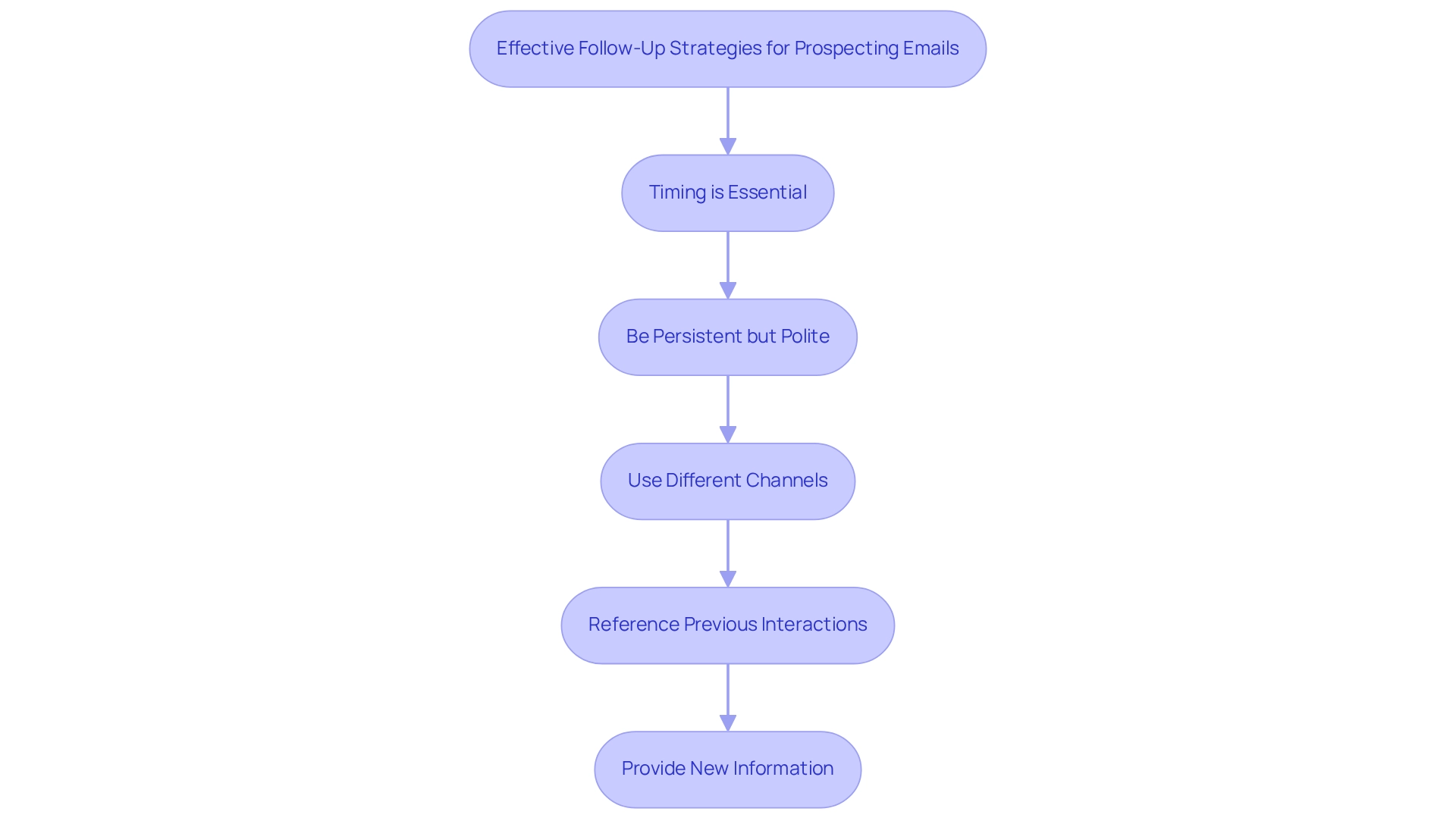
Follow-up strategies are essential for sustaining engagement with prospects during prospecting by email. Effective techniques for enhancing your follow-up emails, aligned with the principles taught in Magical Selling's Consultative Selling training program, are outlined below:
Timing is Essential: Aim to send follow-up messages within 24 to 48 hours after your initial contact. This timeframe for prospecting by email keeps the conversation fresh and enhances the likelihood of receiving a response. Research indicates that when dialing a direct number at the VP level, sales development representatives (SDRs) are 147% more likely to connect, underscoring the importance of timely outreach. Establishing credibility during this initial follow-up can set the tone for a productive relationship, emphasizing the need to sell the problem first before presenting your solution.
Be Persistent but Polite: Following up multiple times is crucial, but each message should provide value without coming across as overly aggressive. A well-timed follow-up during prospecting by email can address any concerns or questions the prospect may have, easing their decision-making process. As Jay Solanki notes, "Follow-ups provide an opportunity to address any concerns or questions that the prospect may have, ultimately easing the decision-making process." This aligns with consultative selling techniques, where understanding the prospect's needs is paramount during prospecting by email.
Use Different Channels: If your messages go unanswered, diversify your approach by reaching out through phone calls or social media platforms. This multi-channel approach, which includes prospecting by email, can significantly enhance engagement. For example, a B2B company that adopted a multi-touch follow-up approach—integrating tailored messages with scheduled calls—experienced a notable 40% rise in engagement over three months. This demonstrates how diverse methods, such as prospecting by email, can connect more effectively with potential clients and enhance productivity through customized account segmentation strategies.
Reference Previous Interactions: Create continuity in your communication by mentioning past conversations or emails. This not only personalizes your message but also reinforces your commitment to the prospect's needs, establishing credibility and trust.
Provide New Information: Each follow-up should introduce something new, whether it’s additional insights, relevant resources, or answers to previous inquiries. This approach keeps the dialogue dynamic and demonstrates your ongoing interest in helping the prospect through prospecting by email. Furthermore, consider employing automation software to simplify repetitive tasks, enabling you to concentrate more on relationship development and efficient follow-ups.
By applying these techniques, professionals can greatly enhance their follow-up efficiency through prospecting by email, ultimately resulting in increased engagement and conversion rates. Effective follow-up strategies not only improve initial prospecting by email efforts but also position representatives as customer advocates during upselling and cross-selling opportunities, thereby contributing to account retention and revenue growth. Remember, it’s never a bad account; it’s always about the appropriate sales approach.
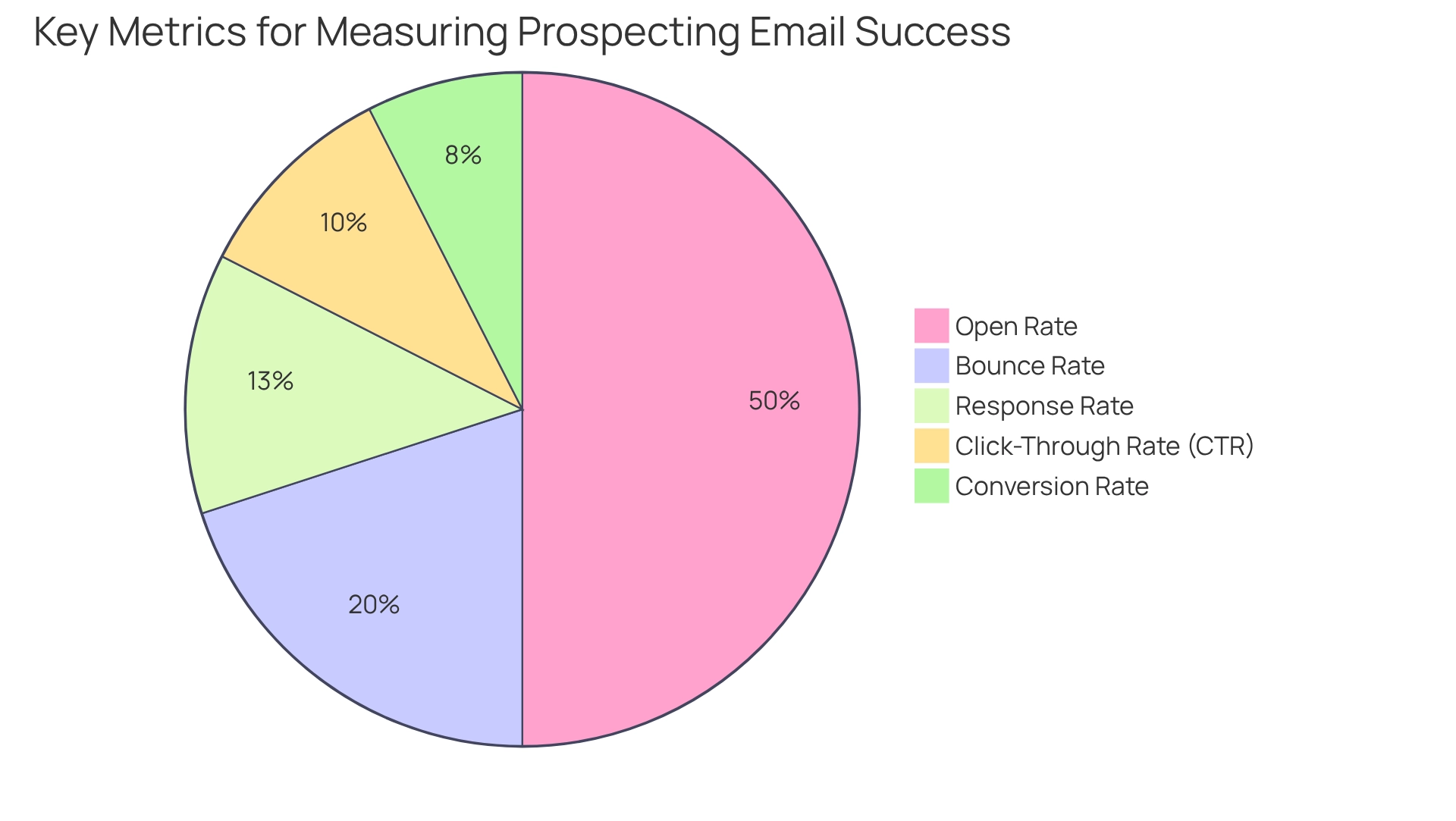
To effectively measure the success of your prospecting emails, focusing on several key metrics is essential, as they provide critical insights into your email performance.
In addition to these metrics, examining open rates and click-through rates in relation to your overall communication plan is vital. For instance, personalizing your marketing communications by segmenting accounts based on the appropriate sales strategy can significantly enhance performance through effective prospecting by email. This aligns with the understanding that it’s not merely about the vertical or client size, but rather about customizing your approach to the specific needs of your audience.
Personalization has demonstrated its ability to improve results in prospecting by email, with 90% of marketers reporting enhanced performance through subscriber segmentation. However, challenges remain, as 18% of professionals find crafting personalized messages difficult. This underscores the importance of addressing subscriber segmentation to boost engagement through prospecting by email.
Moreover, the digital marketing landscape is thriving, with revenue projected to reach nearly $11 billion by the end of 2023, emphasizing the necessity of efficient communication methods like prospecting by email in driving revenue. Magical Selling stresses the need for tailored approaches to maximize this potential.
As Ray Tomlinson once noted, "The test messages were entirely forgettable. Most likely the first message was QWERTYIOP or something similar." This quote serves as a poignant reminder of how far digital communication has advanced and the importance of creating memorable and engaging content.
By consistently monitoring these metrics and adjusting your strategies accordingly, you can enhance the effectiveness of your outreach efforts, particularly in prospecting by email, and drive better results for your sales initiatives. Additionally, consider tracking key metrics such as subscriber list growth, acquisition cost, engagement rates, production time, conversion rates, and ROI to gain a more comprehensive view of your effectiveness in prospecting by email.
To excel in email prospecting, consider these essential strategies:
Understand Your Audience: Customizing your messages to match the specific needs and interests of your prospects is vital. This comprehension not only enhances relevance but also fosters a connection that can lead to increased engagement levels through email prospecting. Recognizing the four types of buyers in Magical Selling's Deal Dimension Framework can assist you in crafting messages that resonate more effectively with each category. Utilize the necessary toolkit for each buyer type to provide practical resources that support your outreach efforts, particularly in email prospecting.
Crafting compelling subject lines is crucial for effective email prospecting, as the subject line serves as your email's first impression and must be engaging enough to encourage recipients to open the email. A well-crafted subject line can significantly impact open rates, especially when sent on optimal days like Tuesday mornings.
Personalize Your Messages: Personalization is key to increasing engagement when prospecting by email. By addressing recipients by name and referencing their specific challenges or interests, you can build rapport and make your communication feel more relevant. Consider segmenting your accounts according to the appropriate marketing strategy required for success, rather than merely by industry or client size, to enhance your personalization efforts. This customized strategy can double your revenue productivity.
Avoid Common Mistakes: Be mindful of pitfalls such as overly generic messaging or failing to follow up. Recognizing these common errors can help you maintain a professional image and improve your outreach effectiveness.
Follow Up Effectively: Persistence is vital in sales. Following up with value-added communication—such as additional insights or resources—during email prospecting can keep the conversation going and demonstrate your commitment to helping the prospect. Tailoring your follow-up strategies based on the buyer type can further enhance your effectiveness.
Measuring and optimizing your communication performance metrics is essential for continuous improvement in email prospecting. By understanding what works and what doesn’t, you can refine your approach, leading to better results over time. This includes categorizing and addressing sales objections strategically to maintain tactical agility, in line with the Buyer Centred Sales System.
In 2025, mastering these messaging techniques for email prospecting will be more crucial than ever, especially as online marketing continues to evolve. With statistics showing that Bill Gates receives around four million spam messages daily, standing out in a crowded inbox is essential. Furthermore, mobile message open rates have surged, with Campaign Monitor indicating that they increased to 68% in 2016 compared to 21% in 2012.
Adapting your strategies to fit these trends is essential for success. Additionally, addressing challenges like email fatigue through innovative tactics, such as A/B testing, as highlighted in the case study "Address Common Roadblocks to Success in Email Marketing," can enhance engagement and effectiveness in your campaigns.

Mastering the art of prospecting emails is critical for sales professionals navigating today's competitive landscape. These emails serve not only as tools for outreach but as vital strategies for building relationships, enhancing engagement, and driving conversions. The effectiveness of prospecting emails lies in their scalability, cost-effectiveness, measurable results, and the ability to personalize communication. By utilizing targeted messaging and understanding the unique needs of each prospect, sales teams can significantly increase their chances of success.
Moreover, key elements of effective prospecting emails—such as compelling subject lines, personalized greetings, and clear calls to action—play an essential role in capturing attention and fostering engagement. Avoiding common pitfalls, like generic messaging and neglecting follow-ups, ensures that sales professionals maintain a professional image and maximize their outreach efforts.
As businesses prepare for the evolving market landscape in 2025 and beyond, the importance of refining these strategies cannot be overstated. By continuously measuring success through key performance metrics and optimizing approaches based on real-time feedback, sales teams can adapt to changing dynamics and enhance their effectiveness. Ultimately, embracing the principles of effective email prospecting will lead not only to increased sales opportunities but also to fostering lasting relationships that are essential for long-term success in the sales domain.
What is prospecting by email?
Prospecting by email involves strategically crafted communications aimed at potential customers to spark interest and initiate conversations about a product or service. These messages are crucial in the selling process, helping sales experts engage with prospects who may not yet be aware of their products.
Why are prospecting messages important?
Prospecting messages serve as gateways to new opportunities, nurture relationships, and ultimately drive revenue growth. They are essential for maintaining momentum in sales cycles, especially given the increasing time required for B2B selling processes.
How does the effectiveness of prospecting emails compare to other marketing methods?
Prospecting emails outperform social media posts by 13% and social media ads by 11% in terms of engagement. Additionally, 73% of marketers have reported an increase in correspondence engagement rates due to improved compliance with regulations.
What are the advantages of using prospecting emails?
The advantages of prospecting emails include scalability, cost-effectiveness, measurable results, personalization, and the ability to build relationships over time. They allow businesses to reach a larger audience without significant costs and provide valuable insights through performance metrics.
What key elements should be included in an effective prospecting email?
An effective prospecting email should include a clear subject line, personalized greeting, value proposition, call to action (CTA), and a professional signature. These elements help maximize engagement and response rates.
How can businesses improve their email prospecting strategies?
Businesses can enhance their email prospecting strategies by maintaining a clean contact list, verifying domains, and employing focused communication and customization to resonate with the specific needs of each prospect.
What role does personalization play in prospecting emails?
Personalization in prospecting emails fosters a connection with the recipient, improves the perceived relevance of the message, and increases the likelihood of conversion, as prospects feel valued and understood.
What is the projected growth of the global door-to-door market and its implications for email prospecting?
The global door-to-door market is projected to expand at an annual rate of 6.4% until 2030, indicating a shift towards more tailored and direct marketing methods, including email outreach, which boosts engagement and conversion rates.


