Overview
The article focuses on mastering sales and marketing alignment, emphasizing its importance for optimizing efficiency and achieving shared goals through collaborative strategies. It supports this by detailing essential elements such as mutual understanding of target audiences, regular communication, and the use of technology, which collectively enhance performance metrics like conversion rates and customer satisfaction.
Introduction
In the competitive landscape of modern business, the alignment of sales and marketing teams has emerged as a pivotal strategy for achieving success. Organizations that cultivate a cohesive partnership between these two critical functions can significantly enhance their performance metrics, from lead conversion rates to overall revenue growth. By focusing on shared objectives, regular communication, and the effective use of technology, companies can bridge the gaps that often hinder collaboration.
As the market continues to evolve, understanding the nuances of sales and marketing alignment becomes essential for organizations aiming to create seamless customer experiences and drive sustainable growth. This article delves into the key strategies, metrics for measuring success, and best practices that can empower businesses to foster an integrated approach to sales and marketing.
Understanding Sales and Marketing Alignment: A Key to Success
Sales and promotional coordination signifies a strategic integration where both teams collaborate toward shared goals, focusing on alignment sales through unified messaging and synchronized strategies. This coordination is crucial for optimizing the efficiency of promotional activities in support of revenue initiatives, ultimately leading to increased conversion rates and improving customer experiences through alignment sales. Essential elements of alignment sales coordination involve:
- A mutual understanding of target audiences
- The establishment of shared success metrics
- The maintenance of regular communication
By cultivating a collaborative environment that focuses on alignment sales, organizations can effectively reduce gaps and inefficiencies, resulting in improved overall performance. Significantly, companies that adopt customized transformation strategies, such as those focused on alignment sales as outlined in Pods Asia's proven approaches, experience substantial enhancements in performance outcomes. For example, statistics show that 94% of companies experience an increase in productivity after implementing a CRM system, highlighting the significance of tools that support this alignment.
Furthermore, a recent report from Salesforce highlights that 81% of teams are investing in AI technologies, leading to enhanced data quality and more personalized customer interactions, which directly improve customer experience. Organizations that implement alignment sales through flexible selling and promotional processes report superior performance metrics, with 10% more representatives achieving their quotas compared to those with less dynamic approaches. As we look toward 2025, the blending of traditional and digital methods will become increasingly critical for commercial success, emphasizing the need for adaptability in marketing strategies.
For instance, organizations that effectively integrate both approaches can create a seamless customer journey that meets diverse consumer preferences. To achieve these improvements, organizations should focus on specific metrics related to alignment sales, such as conversion rates and customer engagement levels, and establish clear timelines for reaching these goals. The advisory packages available can offer a fixed fee structure for the scope established upfront, ensuring a targeted approach to transformation.
The recent case analysis on overhauling the GTM and marketing plan for a regional infrastructure supplier demonstrates how applying these approaches can assist organizations in competing with larger cloud providers and attaining measurable market share expansion.

Strategies for Effective Sales and Marketing Alignment
- Establish Common Goals: Aligning the marketing teams requires a commitment to shared objectives that mirror the overarching business strategy. By establishing common goals, organizations can cultivate a culture of accountability and collaboration, leading to enhanced performance across departments. This practice is vital as 81% of teams are currently investing in artificial intelligence to refine data quality and personalize customer interactions, demonstrating a collective drive towards unified success. Remember, it’s never a bad account; it’s always about the right marketing strategy.
- Regular Communication: It is essential to implement regular meetings between the commercial and marketing teams. These meetings serve as a platform to discuss strategies, share insights, and address challenges, thereby fostering transparency. Effective communication ensures that both teams maintain alignment in sales and remain responsive to market dynamics, which is crucial for achieving common objectives and reducing friction in the transaction process.
- Utilize Technology: Leveraging customer relationship management (CRM) and automation tools is imperative for facilitating data sharing and tracking customer interactions. These technologies empower both teams with insights into lead behavior and preferences, enabling more informed decision-making. As emphasized in the case study titled 'Tracking Customer Interactions,' monitoring every interaction a customer has with the company is essential for minimizing friction and improving the process. With 88% of revenue leaders expecting improvements in their CRM processes through artificial intelligence within the next two years, the incorporation of technology is a crucial element for alignment in sales.
- Create Joint Content: Developing content collaboratively that addresses customer pain points significantly contributes to consistent messaging across promotional and distribution channels. For instance, segmented emails drive 30% more opens and 50% more clickthroughs than unsegmented ones, underscoring the effectiveness of targeted communication strategies. Furthermore, with 91% of companies indicating the use of video as a promotional tool, incorporating video content can improve engagement and significance in communications between promotional and business teams.
- Feedback Loops: Implementing feedback systems for sales groups to assess the quality of prospects produced by promotion is vital. This feedback enables marketing to enhance their approaches, ultimately resulting in better lead quality and increased conversion rates. A comprehensive understanding of customer interactions, facilitated by a robust CRM system, is vital for alignment in sales, reducing friction, and enhancing the overall transaction process. Additionally, it is crucial to segment accounts based on the required sales technique rather than conventional criteria, enabling customized strategies that can double productivity.
- Training and Development: Investing in joint training sessions that educate both teams on each other's roles, processes, and challenges fosters empathy and improves collaboration. This mutual understanding not only enhances team dynamics but also equips both commercial and promotional personnel with the knowledge necessary to navigate the complexities of their respective functions effectively. Aligning strategies to the individual needs of customers further empowers teams, enhancing decision-making skills and driving immediate improvements in outcomes.

Measuring Alignment Success
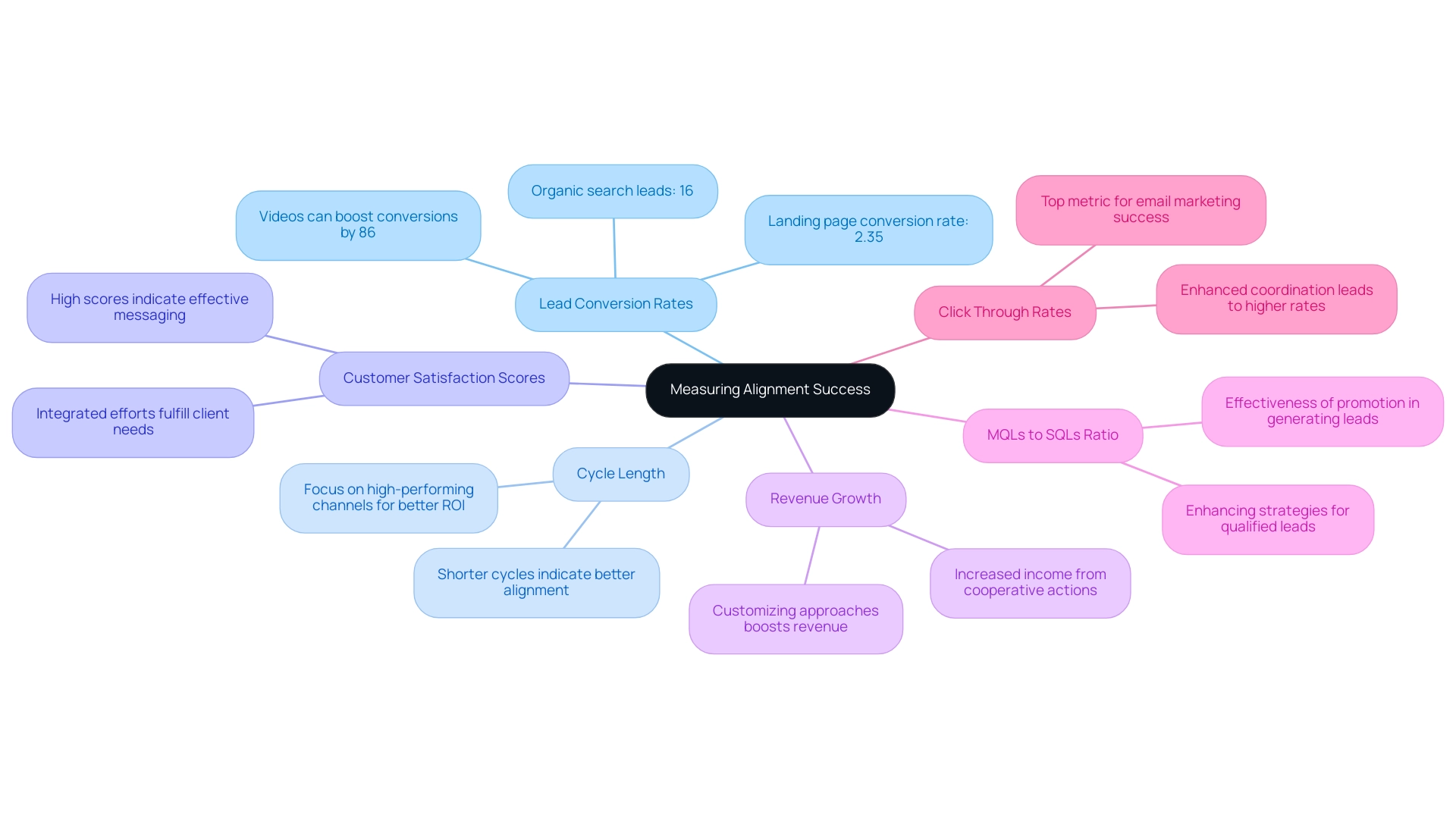
To effectively assess the success of sales and promotional coordination, organizations should concentrate on the following key metrics:
- Lead Conversion Rates: This metric monitors the percentage of leads that successfully transform into customers, offering a clear indication of how well collaboration is generating high-quality leads. Current industry statistics show that organic search leads boast a conversion rate of 16%, making it imperative for businesses to prioritize effective channels. Furthermore, the average landing page conversion rate across industries is 2.35%, and utilizing videos can boost conversions by 86%, emphasizing the significance of adopting high-performing digital strategies. Aligning revenue strategies to the needs of potential clients can directly enhance conversion rates through alignment sales, as sellers become more adept at making informed decisions.
- Cycle Length: Analyzing the duration required to close deals can reveal insights into team alignment and the effectiveness of adapting approaches to customer contexts. A shorter sales cycle often indicates improved communication and alignment sales between the sales and promotional teams, facilitating quicker decision-making. For example, the case study titled 'Conversion Rate by Marketing Channels' shows that focusing on high-performing channels can optimize marketing strategies for better ROI. This arrangement also empowers sellers to make quicker, more effective decisions.
- Customer Satisfaction Scores: Gathering customer feedback is crucial for evaluating the consistency of messaging and service delivery with customer expectations. High customer satisfaction scores indicate the effectiveness of integrated efforts in addressing client needs and achieving alignment sales strategies accordingly. When marketing approaches are well-coordinated, vendors can more effectively fulfill customer expectations, resulting in increased satisfaction.
- Revenue Growth: Tracking overall revenue increase acts as a direct measure of successful coordination efforts. Heightened income is frequently a consequence of cooperative actions between commerce and promotion, emphasizing the significance of teamwork and the need for customizing selling approaches to market conditions. The coordination of sales plays can lead to alignment sales, resulting in more efficient sales approaches and boosting revenue growth.
- Marketing Qualified Leads (MQLs) to Sales Qualified Leads (SQLs): This ratio assesses the effectiveness of promotion in generating leads that fulfill the specific criteria established by the sales team. Comprehending this metric assists in pinpointing areas where promotion can enhance its strategies to generate more qualified leads, ensuring consistency with commercial objectives. A solid connection can boost the quality of leads produced, enhancing alignment sales and improving this ratio.
- Click through Rates: According to the HubSpot State of Marketing Report, click through rate is the top metric professionals use to monitor the effectiveness of their email promotion campaigns, highlighting the importance of tracking such metrics in business and promotional coordination. Enhanced coordination in alignment sales can result in more focused and efficient promotional efforts, indicated by increased clickthrough rates.
Consistently evaluating these metrics is crucial for obtaining insights into possible areas for enhancement and confirming the effect of coordination initiatives. By utilizing a strategic method for these measurements, organizations can cultivate a more unified and efficient partnership through alignment sales and promotion, adjusting their tactics to the particular requirements of their clients for prompt enhancement and improving sellers' decision-making abilities.
Continuous Improvement in Alignment Practices
To maintain ongoing success in sales and marketing alignment, organizations must implement several best practices:
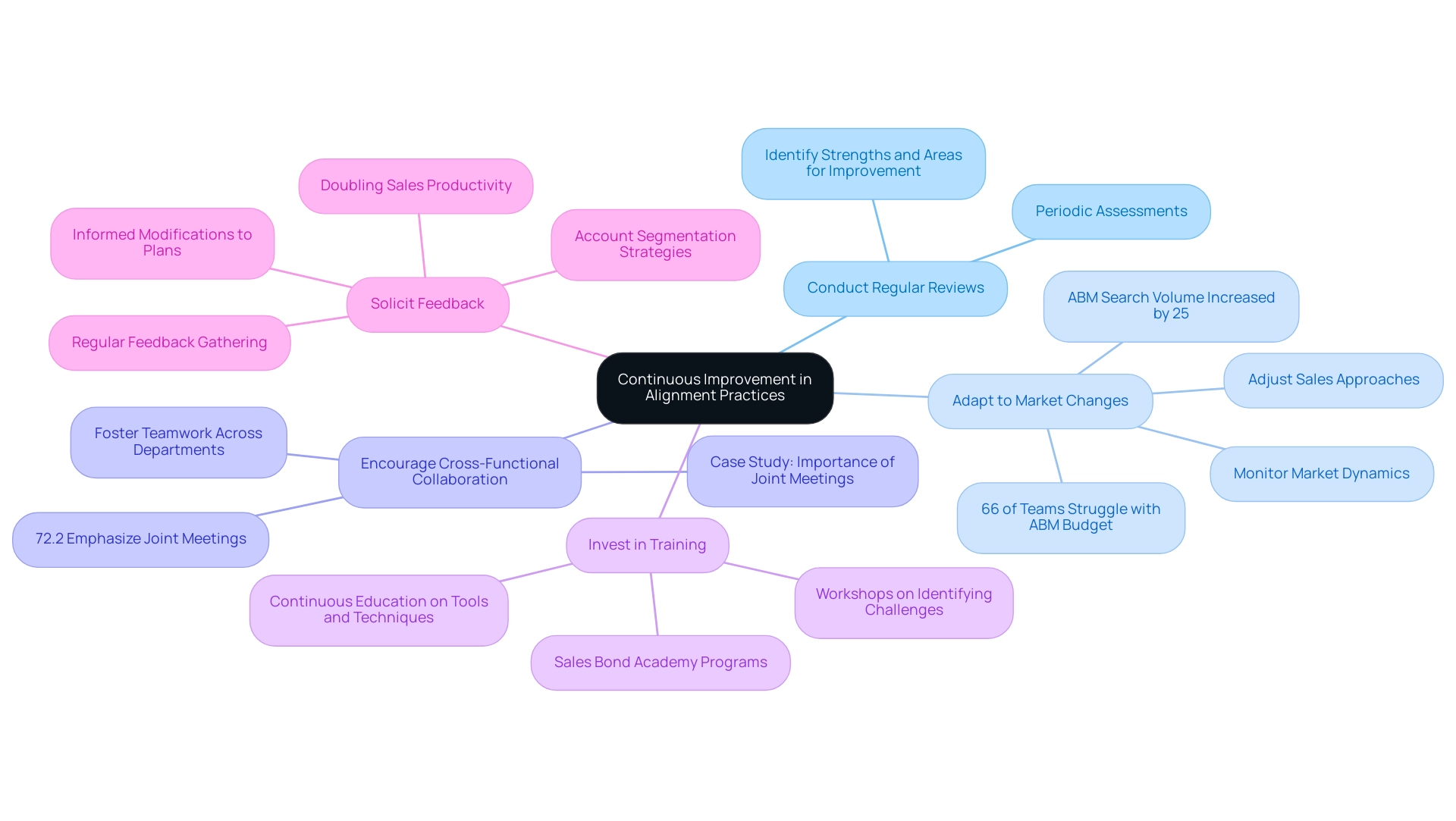
- Conduct Regular Reviews: Establish a schedule for periodic assessments of alignment practices, which allows teams to pinpoint strengths and identify areas for improvement. This method guarantees that coordination techniques stay efficient and adaptable to organizational requirements.
- Adapt to Market Changes: Organizations should remain vigilant about shifts in market dynamics and evolving customer preferences. By adjusting alignment sales approaches accordingly, businesses can enhance their responsiveness and relevance in a competitive landscape. Significantly, the search volume for Account-Based Promotion (ABM) surged by 25% between July 2021 and June 2022, indicating a growing focus on targeted promotional approaches. However, 66% of marketing teams have trouble locating the appropriate budget for ABM, emphasizing the difficulties organizations encounter in executing these approaches effectively.
- Encourage Cross-Functional Collaboration: Fostering a culture of teamwork across various departments—beyond just commerce and marketing—can significantly improve cooperative efforts. Input from product development, customer service, and operations can provide valuable insights that enhance coordination strategies and lead to improved outcomes. According to recent surveys, 72.2% of sales and marketing teams emphasized the importance of regular joint meetings for alignment sales, stating that these meetings are crucial for ongoing communication and collaboration. This is supported by a case study named 'Importance of Joint Meetings,' which demonstrates how regular meetings contribute to cohesion and success.
- Invest in Training: Continuous education for teams on the latest tools, techniques, and best practices is essential for maintaining high levels of effectiveness. Innovative training programs, like those provided by the Sales Bond Academy, not only improve skillsets but also promote a common understanding of objectives across departments. Workshops focused on identifying challenges—specifically the 'kriptonites' in sales and presales personnel—can significantly enhance performance in teams, empowering them to articulate value effectively and differentiate their offerings.
- Solicit Feedback: Regularly gathering feedback from both sales and marketing teams is crucial for identifying challenges and celebrating successes in collaboration efforts. This feedback loop allows informed modifications to plans, ensuring that both teams maintain alignment sales in their objectives and approaches. By incorporating insights from tailored account segmentation strategies, organizations can create a more cohesive alignment strategy that drives brand success and enhances lead generation quality. Segmenting accounts based on appropriate sales approaches, rather than solely on vertical or client size, can double sales productivity and lead to more effective engagement with potential clients.
Conclusion
Aligning sales and marketing teams is not merely a tactical decision; it is a strategic necessity that can propel organizations toward enhanced performance and sustained growth. As outlined, establishing common goals and fostering regular communication are foundational practices that facilitate collaboration. By leveraging technology, such as CRM systems and marketing automation tools, businesses can streamline processes and improve the quality of interactions with customers, ultimately leading to better conversion rates.
Measuring the success of this alignment through key metrics such as:
- Lead conversion rates
- Customer satisfaction scores
- Revenue growth
provides organizations with valuable insights into their performance. This data-driven approach empowers teams to refine their strategies continuously, addressing any gaps that may arise and ensuring that both sales and marketing efforts are in sync with customer expectations.
Moreover, embracing a culture of continuous improvement through:
- Regular reviews
- Adaptation to market changes
- Cross-functional collaboration
can significantly enhance alignment practices. Investing in joint training and soliciting feedback will not only strengthen team dynamics but also foster a shared understanding of objectives. In an era where customer preferences are rapidly evolving, organizations that prioritize sales and marketing alignment will be better equipped to navigate challenges and seize opportunities, leading to a more seamless customer journey and ultimately, greater business success.
Frequently Asked Questions
What is sales and promotional coordination?
Sales and promotional coordination is a strategic integration where sales and promotional teams collaborate toward shared goals, focusing on unified messaging and synchronized strategies to optimize promotional activities and support revenue initiatives.
Why is alignment in sales important?
Alignment in sales is crucial for optimizing the efficiency of promotional activities, which leads to increased conversion rates and improved customer experiences.
What are the essential elements of alignment sales coordination?
The essential elements of alignment sales coordination include a mutual understanding of target audiences, the establishment of shared success metrics, and the maintenance of regular communication.
How does collaboration in alignment sales impact organizational performance?
Cultivating a collaborative environment focused on alignment sales helps reduce gaps and inefficiencies, resulting in improved overall performance.
What benefits do companies experience from implementing alignment sales strategies?
Companies that adopt customized transformation strategies focused on alignment sales often experience substantial enhancements in performance outcomes, including increased productivity and improved customer interactions.
What statistics support the effectiveness of CRM systems in alignment sales?
Statistics show that 94% of companies experience an increase in productivity after implementing a CRM system, highlighting the importance of tools that support alignment sales.
How is AI technology impacting sales and marketing alignment?
A report from Salesforce indicates that 81% of teams are investing in AI technologies, which enhances data quality and leads to more personalized customer interactions, directly improving customer experience.
What performance metrics are associated with organizations that implement alignment sales?
Organizations that implement alignment sales through flexible selling processes report superior performance metrics, with 10% more representatives achieving their quotas compared to those with less dynamic approaches.
What is the significance of blending traditional and digital methods in sales and marketing?
Blending traditional and digital methods is becoming increasingly critical for commercial success, as it allows organizations to create a seamless customer journey that meets diverse consumer preferences.
What should organizations focus on to achieve improvements in alignment sales?
Organizations should focus on specific metrics related to alignment sales, such as conversion rates and customer engagement levels, and establish clear timelines for reaching these goals.
How can advisory packages assist organizations in transformation?
Advisory packages can offer a fixed fee structure for the scope established upfront, ensuring a targeted approach to transformation in alignment sales.
Can you provide an example of how alignment sales strategies can benefit organizations?
A case analysis of overhauling the go-to-market and marketing plan for a regional infrastructure supplier demonstrated how applying alignment sales approaches can help organizations compete with larger cloud providers and attain measurable market share expansion.