

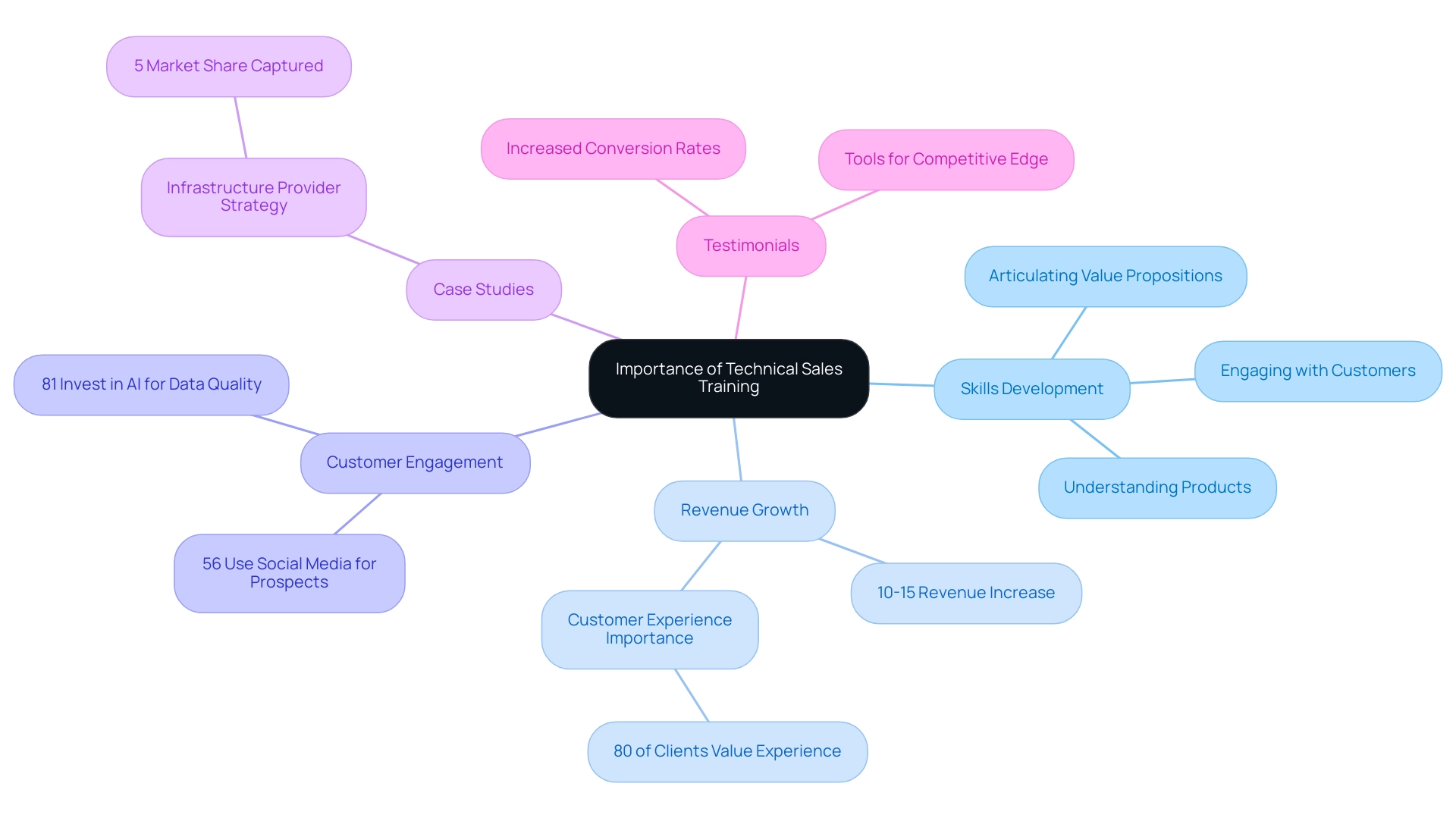
The significance of technical sales training is paramount, as it equips sales professionals with the essential skills required to navigate complex selling environments and enhance customer engagement. This, in turn, drives revenue growth. Organizations that invest in such training witness substantial increases in conversion rates and customer satisfaction. Research indicates that trained teams can achieve revenue increases of 10-15% and improved performance metrics. Such compelling data underscores the necessity of prioritizing technical sales training to foster a thriving sales environment.
In the fast-paced realm of technical sales, where technology and customer expectations evolve at an unprecedented pace, the significance of specialized training cannot be overstated. Sales professionals must not only master their products but also articulate their value effectively in an increasingly competitive landscape.
As organizations strive to enhance their sales performance, technical sales training becomes a pivotal tool, equipping teams with the essential skills to engage customers, navigate complex inquiries, and drive revenue growth. With compelling statistics indicating that companies investing in such training can witness revenue increases of up to 15%, the stakes have never been higher.
This article explores the multifaceted benefits of technical sales training, examining its critical components, the role of technology, and the necessity for continuous learning in achieving sustained success.
Technical sales training is critical for equipping professionals with the skills necessary to excel in complex selling environments. In the rapidly evolving, technology-driven market of 2025, marketing teams must not only have a profound understanding of their products but also be adept at articulating their value propositions to clients. This specialized training significantly enhances their ability to engage with customers, effectively address technical inquiries, and ultimately close deals.
At Magical Selling, our Discovery Workshops are designed to uncover the 'kriptonites' within presales and selling groups, identifying challenges and enhancing performance. By focusing on commercial strategies, value communication, and essential differentiators, we empower teams to transform their approach to meet the changing needs of clients. This customer-centric methodology is vital for tackling low conversion rates and fostering client loyalty in a dynamic market.
The impact of technical sales training on revenue growth is profound. Research indicates that organizations investing in such development can see revenue increases of 10-15%. This statistic becomes particularly significant when considering that 80% of clients believe the experience a brand provides is nearly as important as the products and services themselves.
By enhancing client interactions through effective training, sales teams can directly contribute to improved financial outcomes.
Moreover, with 81% of sales teams now investing in artificial intelligence to enhance data quality and personalize interactions, the integration of advanced tools alongside education is becoming increasingly essential. This investment in technology bolsters technical training by equipping teams with the necessary resources to utilize data effectively and enhance customer engagement.
Statistics reveal that 56% of sales professionals use social media to identify new prospects, underscoring the importance of providing teams with the skills to leverage these platforms effectively. Furthermore, expert insights indicate that sales development has been crucial in boosting performance for over 70 years, with sales enablement teams offering essential support to ensure ongoing success. Aayushi Sanghavi, Campaign Coordinator at G2, notes that "43% of individuals utilize intelligence tools for tracking and pipeline management, representing a 54% increase from two years ago," highlighting the growing reliance on technology in sales processes.
Case studies, such as our work in redesigning the go-to-market and revenue strategy for a regional infrastructure provider, illustrate the importance of technical sales training in technology-driven markets. By reengineering the blueprint and establishing a comprehensive commercial function from the ground up, we aided our client in challenging major cloud providers and capturing a 5% market share, reinforcing the necessity for teams to be trained in delivering exceptional customer experiences.
Testimonials from our clients further underscore the effectiveness of our development programs. For instance, one client stated, "The Discovery Workshops transformed our approach to transactions, resulting in a significant increase in our conversion rates." Another noted, "The training provided by Magical Selling equipped our team with the tools necessary to compete effectively in a challenging market."
In conclusion, the significance of technical sales training in 2025 cannot be overstated. It not only equips professionals with the essential skills to navigate complex scenarios but also drives measurable results in revenue growth and customer satisfaction. As the market continues to evolve, organizations must prioritize this development to maintain a competitive advantage.
Effective technical sales training is built upon several essential components that drive success in today's competitive landscape. Foremost among these is product knowledge; professionals in commerce must possess a deep understanding of the technical specifications and advantages of their offerings. This expertise enables them to address customer inquiries with confidence and clarity, ultimately fostering trust and credibility.
In the Age of the Alternatives, where value articulation is crucial, sales professionals must learn to navigate not only direct rivals but also edge competitors and disruptors. Training programs should equip professionals with strategies to articulate their value proposition effectively, ensuring they can differentiate their offerings in a crowded market.
Customer engagement techniques are equally crucial. Training programs should equip groups of representatives with the skills to connect with clients on a personal level, enhancing their ability to identify and address specific needs. Incorporating role-playing scenarios into training allows professionals to practice real-world interactions, honing their communication and negotiation skills in a controlled environment.
This experiential learning approach not only enhances confidence but also equips teams for the complexities of real-world scenarios.
Mastering consultative selling is essential for establishing credibility and effectively addressing buyer competence. Sales professionals must learn to sell the problem first, followed by the solution, thereby demonstrating their understanding of client challenges and showcasing their decision-making and risk mitigation capabilities.
Ongoing evaluation and feedback systems are essential for ensuring that professionals are evolving alongside market demands. Research shows that vendors are 44% more successful at achieving targets when supervisors offer feedback during development, emphasizing the significance of continuous assistance and assessment.
Furthermore, organizations that invest in ongoing sales education experience enhanced performance and increased revenue, emphasizing the necessity for a well-organized sales enablement strategy. As the commercial landscape evolves, particularly with the increasing integration of AI—81% of teams are currently investing in this technology—training programs must adapt to incorporate these advancements, enhancing data quality and personalizing customer interactions.
Moreover, the importance of direct interactions in training is underscored by the fact that door-to-door transactions generate nearly $30 billion annually, highlighting the necessity for effective engagement strategies.
As Olga Kirillova, Fractional Marketing & Sales Co-Founder, states, "So if you want paying clients in your business, becoming comfortable with transactions is one of the most valuable skills you can learn." This viewpoint strengthens the essential nature of selling abilities in achieving business success.
In summary, effective technical sales training includes product knowledge, customer interaction, role-playing, and ongoing feedback. By concentrating on these essential elements and tackling the challenges presented by market rivalry and consumer proficiency, organizations can enable their selling teams to thrive, ultimately fostering sustainable growth and success. For more information on our learning modules, including pricing details, please visit Magical Selling's website.
The benefits of technical sales training are extensive and significant. Sales professionals who engage in comprehensive development programs often report heightened confidence in their skills, translating into improved conversion rates and enhanced customer satisfaction. Indeed, organizations emphasizing technical sales training have noted substantial performance enhancements, with some research suggesting a 50% rise in net revenue per employee.
Furthermore, well-prepared sales teams excel at building lasting connections with clients, nurturing loyalty and promoting repeat business. This not only bolsters the organization's reputation but also contributes to sustainable growth.
By 2025, the landscape of sales education has changed considerably, with 56% of sales experts now utilizing social media to discover new prospects. This shift underscores the importance of incorporating contemporary marketing methods into development programs. Moreover, the typical B2B transaction process has extended by 25% compared to five years ago, emphasizing the necessity for sales personnel to possess advanced skills and strategies to navigate this evolving environment.
Case studies indicate that professionals who embrace social selling methods are 51% more likely to achieve their targets, and 61% of organizations report revenue growth as a direct consequence of these initiatives. This illustrates the tangible advantages of technical sales training in improving conversion rates and overall sales achievement. Moreover, integrating social selling methods into development programs demonstrates how contemporary strategies can be effectively imparted to sales teams, in line with Magical Selling's customized solutions for enhanced performance and growth.
Statistics reveal that 43% of individuals employ sales intelligence tools for monitoring transactions and pipelines, representing a 54% increase from two years ago. This trend highlights the growing reliance on technology in commercial processes, reinforcing the need for continuous education to keep pace with industry developments.
Additionally, a notable 92% of employees believe that workplace education positively influences their job involvement, further strengthening the case for investing in technical sales training.
In conclusion, the impact of technical sales training on conversion rates is substantial, with expert opinions consistently validating its significance. As organizations invest in the development of their revenue teams, they not only enhance individual performance but also drive collective success, positioning themselves for sustained growth in a competitive market. Testimonials from clients who have successfully adopted Magical Selling's programs further illustrate these benefits, showcasing real-world examples of enhanced performance and measurable results.

Technology is revolutionizing technical sales training, making it more effective and engaging than ever before. Learning Management Systems (LMS) are at the forefront of this transformation, empowering organizations to deliver customized development programs that cater to the diverse needs of sales professionals. These systems facilitate the monitoring of progress and performance, ensuring that development efforts align with both individual and organizational goals.
In 2025, the integration of virtual reality (VR) simulations is poised to redefine the training landscape. By enabling sales professionals to immerse themselves in realistic scenarios, VR creates a risk-free environment for honing skills and building confidence. This innovative approach not only enhances learning retention but also prepares teams for real-world interactions, which is crucial given that over 70% of buyers now prefer remote meetings over traditional in-person engagements.
Moreover, the incorporation of data analytics within development programs provides valuable insights into individual performance, helping to identify strengths and areas for improvement. This data-driven methodology is essential, especially as Salesforce indicates that '81% of teams are investing in AI, with advantages including enhanced data quality and personalized customer interactions.' Such investments underscore the importance of integrating advanced technologies into instructional methodologies, aligning with value selling strategies that balance positive outcomes with consequences for effective buyer engagement.
The impact of Learning Management Systems on sales education is further evidenced by case studies that highlight their effectiveness. For instance, a study on Sales Force Automation Education revealed that the successful adoption of sales force automation systems is closely linked to comprehensive instruction. Organizations that prioritize development witness significant improvements in revenue effectiveness, whereas those that neglect this aspect often face detrimental effects on performance.
This underscores the vital role of LMS in facilitating efficient development and addressing sales-related challenges in competitive environments.
As the global door-to-door commerce market continues to expand, projected to generate nearly $30 billion annually and grow at a yearly rate of 6.4% until 2030, the demand for effective educational solutions becomes increasingly critical. By harnessing technology, such as LMS and VR, organizations can create engaging learning experiences through technical sales training that resonate with today’s tech-savvy professionals, ultimately driving enhanced outcomes and fostering sustainable growth. This approach is particularly beneficial for startups and companies seeking tailored revenue solutions and development programs, as well as for enhancing sales leadership effectiveness through immediate performance insights and personalized coaching.
At Magical Selling, we recognize the importance of these innovative training methods and are committed to providing comprehensive solutions that empower professionals to excel in their roles.

Sales groups operating in technical environments face unique challenges, including the rapid evolution of technologies, complex product offerings, and escalating customer expectations. If not managed effectively, these factors can severely impede revenue performance. Targeted technical sales training emerges as a vital solution, equipping professionals with the essential knowledge and skills to navigate these complexities and adapt to emerging market trends.
For example, Magical Selling's discovery workshops are designed to uncover the 'kriptonites' within presales and support groups, focusing on sales motions, value articulation, and key differentiators. These workshops empower organizations to identify specific challenges and enhance performance, ultimately unlocking the full potential of their teams.
Training programs emphasizing ongoing education and skill development enable sales groups to remain competitive and responsive to client needs. By fostering a culture of continuous improvement, organizations can ensure their staff are well-prepared to meet the demands of a dynamic marketplace. Projections for 2025 indicate that commercial teams investing in advanced educational methodologies will experience significant enhancements in performance metrics, with many reporting improved customer retention rates as a direct result of their educational initiatives.
Notably, representatives who prioritize authentic connections often witness increased retention rates, highlighting the importance of relationship-building in training. Additionally, case studies illustrate the effectiveness of targeted training, particularly in technical sales, in addressing specific challenges in technical representation. One notable instance showcases how a company launched a comprehensive marketing orientation program for deep tech startups in the healthcare and pharmaceutical sectors.
This initiative not only improved representatives' ability to engage with clients but also led to a substantial increase in client loyalty and long-term business success, contributing to the acquisition of 17 new logos in just two quarters. By emphasizing significant engagements and responding to client needs, sales groups can achieve better outcomes and foster sustainable growth.
As the market continues to evolve, the importance of adapting educational programs to incorporate new technologies cannot be overstated. With 81% of commercial teams investing in AI to enhance data quality and personalize customer interactions, it is crucial for development initiatives to reflect these advancements. Accurate sales forecasts are also essential for resource allocation and setting realistic expectations, further underscoring the necessity for effective development.
By integrating innovative revenue strategies and expert insights into educational programs, organizations can adeptly address the challenges inherent in technical selling through technical sales training, ultimately leading to improved performance and organizational success. As Gong notes, leaders who instruct their representatives to initiate cold calls with the question, 'How've you been?' see a 6.6% increase in rep success rates, illustrating the impact of effective selling techniques.
In contrast to competitors, Magical Selling's unique approach to discovery workshops and tailored training programs positions it as a market leader. The pricing for these services is structured to deliver maximum value, ensuring that organizations can invest in their teams without sacrificing quality.
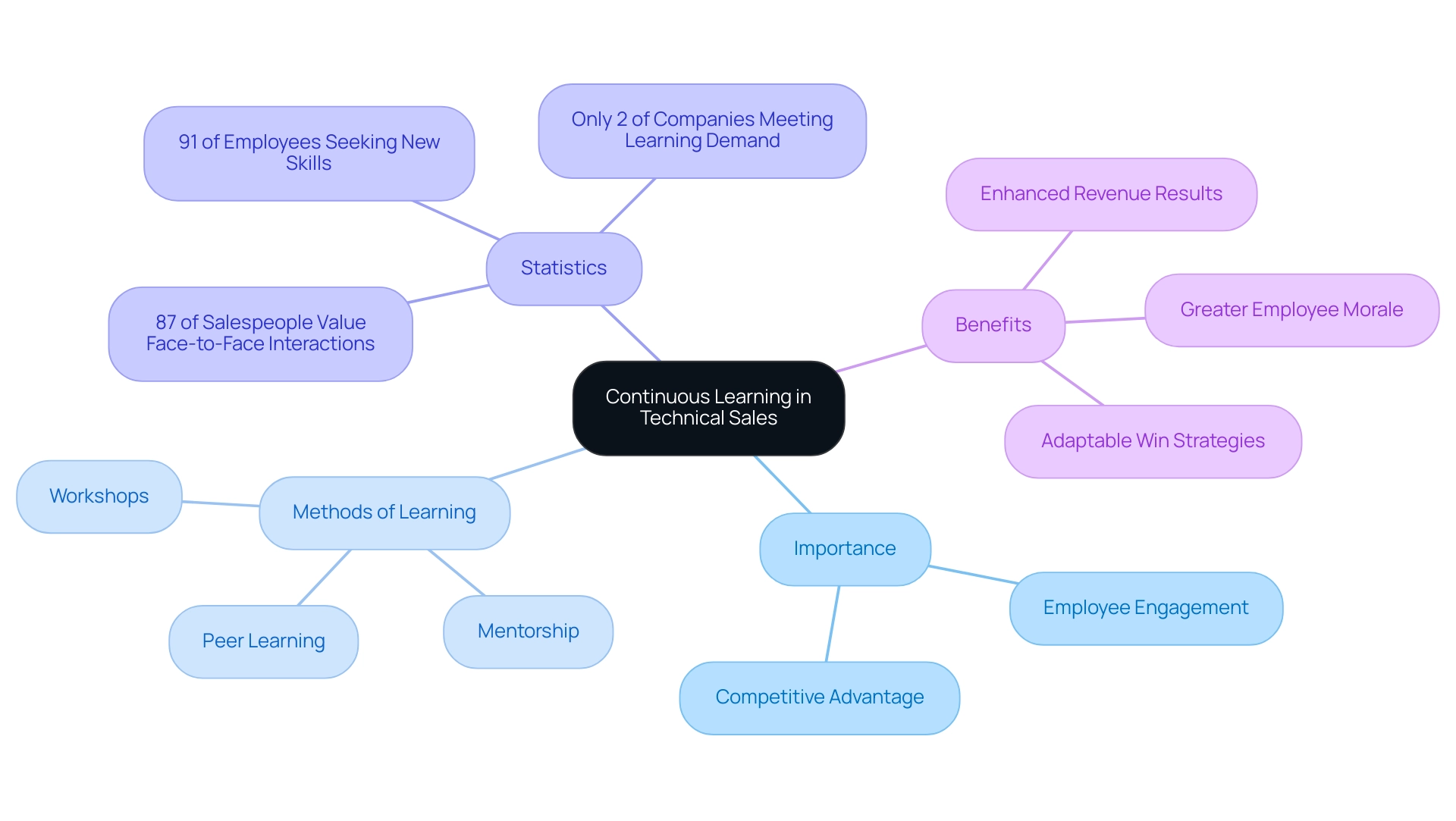
In the rapidly evolving landscape of technology commerce, fostering a culture of continuous learning is paramount for maintaining a competitive advantage. As technologies progress and customer preferences change, professionals in the field must stay updated on the latest industry developments. Organizations that prioritize continuous learning not only enhance their workforce's capabilities but also boost employee engagement and retention.
Regular skill development sessions, workshops, and knowledge-sharing initiatives, such as Magical Selling's Discovery Workshops, are essential for identifying the kryptonite in sales groups and ensuring professionals receive technical sales training to stay informed about new products, market trends, and best practices. Statistics show that 87% of salespeople believe face-to-face interactions with clients are essential, emphasizing the importance of strong communication abilities that can be developed through continuous practice. Furthermore, a recent report reveals that inadequate technical sales training can lead to high turnover, inconsistent selling methodologies, diminished confidence among representatives, and suboptimal performance, underscoring the need for a robust technical sales training framework.
Additionally, 91% of employees are actively seeking to learn new skills, yet only 2% of companies are effectively meeting this demand, illustrating a significant gap that organizations must address. The B2B commerce landscape has transformed, with buyers conducting extensive research and involving multiple decision-makers in the purchasing process. This complexity necessitates that marketing strategies adapt by providing detailed comparison guides and leveraging various channels to engage effectively with decision-makers.
By integrating ongoing education into their culture, organizations can ensure their staff is well-prepared to navigate these complexities and attain sustained success. In 2025, achieving success will necessitate combining conventional and digital approaches for optimal outcomes, making continuous education even more essential. Optimal methods for promoting ongoing education in sales groups involve creating mentorship initiatives, supporting peer-to-peer learning, and using technology to enhance access to development resources.
The effect of continuous technical sales training on the performance of sales personnel is significant; organizations that invest in regular training sessions frequently observe enhanced revenue results and greater employee morale. Furthermore, creating adaptable win strategies that can respond to challenges in changing markets will enable groups to thrive. As the sales landscape continues to evolve, committing to a robust learning framework that incorporates technical sales training to empower teams to excel will be essential.
In the dynamic world of technical sales, specialized training is not merely advantageous; it is critical for achieving success. By equipping sales professionals with essential skills and knowledge, organizations can significantly enhance their ability to engage customers, articulate compelling value propositions, and ultimately drive revenue growth. The evidence speaks volumes: companies that invest in technical sales training often see revenue increases of 10-15%, underscoring the direct link between training and financial performance.
The fundamental elements of effective training—product knowledge, customer engagement strategies, and continuous feedback—empower sales teams to adeptly navigate complex sales environments. As technology continues to transform the sales process, the integration of tools such as Learning Management Systems and virtual reality simulations becomes vital for creating immersive and impactful training experiences. These innovations not only bolster learning retention but also prepare teams for the real-world challenges they will encounter.
Moreover, cultivating a culture of continuous learning within organizations is essential. As the sales landscape grows increasingly intricate, ongoing training ensures that teams remain competitive and responsive to evolving customer needs. Prioritizing relationship-building and authentic connections can significantly enhance customer loyalty and retention, ultimately paving the way for sustainable growth.
In conclusion, the significance of technical sales training cannot be overstated. By prioritizing specialized training and adapting to the latest technological advancements, organizations position themselves for success in a competitive market. Investing in the development of sales teams not only enhances individual performance but also drives collective success, ensuring that organizations can thrive amidst the challenges of an ever-changing environment.
Why is technical sales training important for professionals in 2025?
Technical sales training is critical for equipping professionals with the skills necessary to excel in complex selling environments, particularly in a rapidly evolving, technology-driven market. It enhances their ability to engage with customers, address technical inquiries, and close deals.
What are the key components of effective technical sales training?
Effective technical sales training includes product knowledge, customer engagement techniques, consultative selling, role-playing scenarios, and ongoing evaluation and feedback systems.
How do Discovery Workshops at Magical Selling help sales teams?
Discovery Workshops uncover the challenges within presales and selling groups, focusing on commercial strategies and value communication to enhance performance and meet changing client needs.
What impact does technical sales training have on revenue growth?
Organizations that invest in technical sales training can see revenue increases of 10-15%. This is significant as 80% of clients consider the experience a brand provides nearly as important as the products themselves.
How does technology, such as artificial intelligence, play a role in technical sales training?
With 81% of sales teams investing in AI, technology enhances data quality and personalizes customer interactions, making it essential to integrate advanced tools alongside education in training programs.
What statistics highlight the importance of social media in sales?
56% of sales professionals use social media to identify new prospects, emphasizing the need for training that equips teams to leverage these platforms effectively.
Can you provide an example of how technical sales training has benefited a client?
A case study involving a regional infrastructure provider showed that redesigning their go-to-market strategy through technical sales training helped them challenge major cloud providers and capture a 5% market share.
What do testimonials from clients say about the effectiveness of Magical Selling's training programs?
Clients have reported significant increases in conversion rates and noted that the training equipped their teams with the necessary tools to compete effectively in challenging markets.
What ongoing support is necessary for sales professionals after training?
Continuous evaluation and feedback are essential for ensuring that professionals evolve alongside market demands, with research indicating that vendors are 44% more successful when supervisors provide feedback during development.
What is the overall conclusion about the significance of technical sales training?
The importance of technical sales training in 2025 is paramount, as it equips professionals with essential skills, drives revenue growth, and enhances customer satisfaction, helping organizations maintain a competitive advantage.


